Electronics packaging has to protect more than the outside shape. A housing may include a display, connector, switch, lens, cable, pin or coated surface that cannot carry pressure. For European OEM, contract-manufacturing and distribution programmes, custom EPE foam inserts for electronics must control movement while keeping every sensitive feature clear.

Hongying develops project-specific pearl cotton packaging from a 3,000+ m² facility. Buyers seeking repeat orders should send controlled product information, expected quantities and the complete box or case configuration so the factory can design and quote a production-ready insert rather than guess from a photograph.
Why Generic Foam Fails Precision Electronics
Flat pads and loose fillers can cushion broad loads, but they do not reliably control orientation or stop a device from sliding. A poorly positioned cavity may transfer impact through a button or display. An overly tight fit may scratch a finish, deform a gasket or make the assembly line force the product into place.
A precision EPE insert uses defined support zones, retention zones and clearance zones. The design is based on the product’s mass, geometry, fragility and shipping environment. It is then evaluated as part of the carton, case or kit—not as a separate foam sample.
Support zones
Identify structural areas capable of carrying the product weight, such as a strong housing frame, base or reinforced edge. Broad contact can distribute load more safely than a small point. The drawing should show where the insert is intended to touch.
No-contact zones
Mark displays, lenses, fan openings, connectors, exposed pins, calibration controls, labels and soft coatings. Provide clearance for product tolerances and for any protective bag or film fitted in production. A clean silhouette is not enough if it presses the wrong feature.
Send the Actual Production Condition
The factory needs the product as it will be packed. Include fitted caps, cables, accessories, protective films and labels. If the prototype differs from mass production, provide the change list and updated dimensions. Hidden variations are a frequent cause of late cavity revisions.
Use a dimensioned 2D drawing or 3D file where available. State maximum length, width and height, weight, centre of gravity and local projections. If several SKUs share one insert, create a matrix showing which cavity or removable block applies to each version.
Choose Cavity Fit for Retention and Packing Speed
A device should not rattle, but “tighter” is not automatically safer. EPE compresses during insertion, and repeated rubbing can affect decorative surfaces. Define clearance at critical locations and test loading with the people, gloves and work position used on the real packing line.
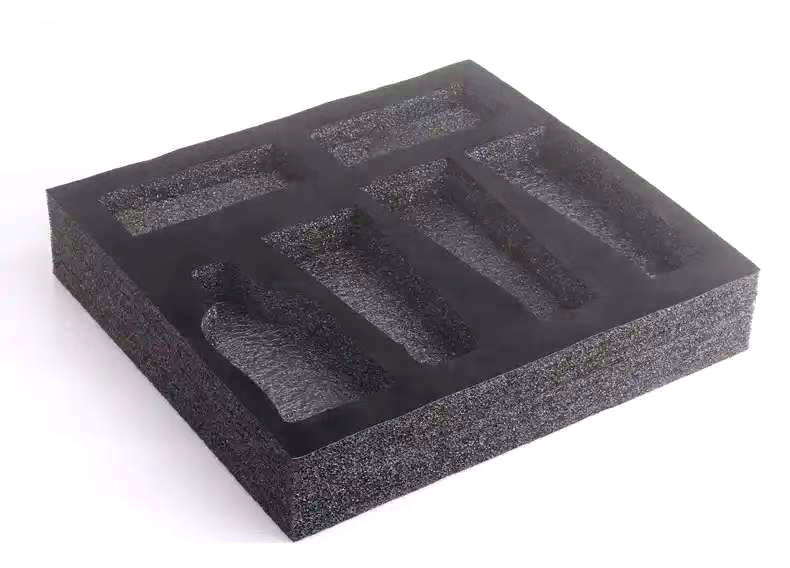
Finger notches, pull tabs, tapered lead-ins and asymmetric orientation features can make removal faster. If the customer must unpack the device without tools, include that user experience in sample approval. For service kits, ensure technicians can return every component to its correct cavity.
Use poka-yoke where orientation matters
An asymmetric cavity or keyed accessory position can prevent reverse loading. Numbered positions, printed labels or a packing diagram may support mixed kits. The design should make an error difficult, not rely only on operator memory.
Review EPE Density, Thickness and Construction Separately
Density, thickness and compression behaviour are related but not interchangeable. A thick soft layer can bottom out under a concentrated load, while a firmer structure may transmit more shock if the contact area is too small. Ask the precision EPE packaging supplier to identify the quoted grade and layer construction.
Laminated EPE can create deep pockets or stepped support levels. Open frames can reduce weight where a solid bottom is unnecessary. Removable blocks can serve product variants. Each bond line, thin wall and unsupported bridge should be examined in the sample because these areas influence long-term stability.
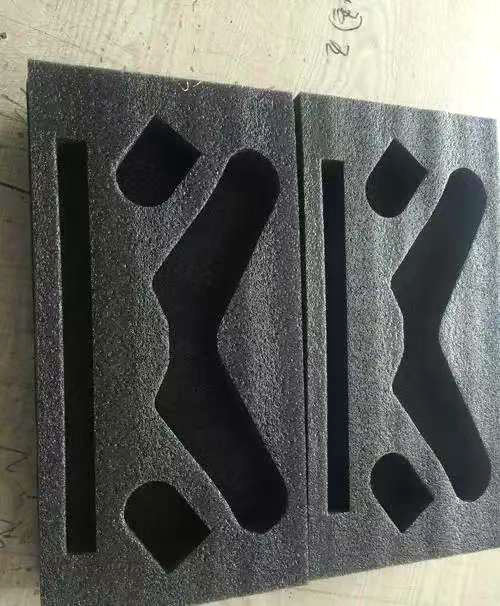
Standard EPE Is Not Automatically ESD Protective
Colour is not a valid electrical specification. If a printed circuit board, sensor or electronic assembly requires electrostatic protection, the buyer should define the relevant material type, resistance range, test method, conditioning and acceptance frequency. The complete ESD protection concept may also include bags, grounding and handling controls.
If ESD protection is not required because the finished device is enclosed, standard EPE may be considered based on mechanical and surface requirements. Avoid paying for an undefined function. Request documentation for the exact grade delivered and prohibit unapproved substitutions.
Keep regulatory and performance claims specific
Statements such as antistatic, conductive, RoHS, REACH or PPWR-ready must be tied to a material, report, scope and date. Buyers should list the documents required for their EU market and review whether they cover the supplied colour, grade and additives. The complete packaging compliance decision remains project-specific.
Protect Screens, Coatings and Labels
High-gloss plastic, painted metal, soft-touch coating and optical surfaces may show rubbing or pressure marks. Test direct contact with the actual production finish. If necessary, retain a protective film, bag the device or add a compatible liner, then design the cavity around that final packed condition.
Do not use a fragile display as a height stop. A raised border or surrounding frame can transfer vertical load to stronger housing areas. Check whether accessories can escape their cavities and land on the screen during a drop or vibration event.
Organise Devices, Cables and Accessories
A complete kit may contain a main unit, power supply, cable, adapter, probe, battery, manual and fasteners. Each component needs a defined position and packing sequence. Cable cavities should consider the approved bend radius and connector protection; a forced coil can spring out and push against the lid.

Heavy accessories should not sit above a fragile device without an independent load path. Small parts may need bags or covered pockets so they remain contained. Provide the final bill of materials because a missing accessory can change top clearance and carton closure.
Integrate the Insert With the Outer Pack
Send the usable inside dimensions of the carton, plastic case, metal case or tote. Include corner radii, hinges, latches, ribs and lid intrusion. A nominal catalogue dimension may not represent the space available to foam.
Check side clearance, bottom cushioning and top restraint after the product is loaded. The insert should not bow because it is forced into a small box, and the lid should not compress sensitive parts. If the outer pack changes supplier, revalidate the complete assembly.
Optimise for European freight
For large orders, compare pieces per carton, cartons per pallet and freight volume. A frame-style insert or more efficient accessory layout can sometimes reduce the outside pack. However, volume reduction must be supported by protection testing and cannot be judged from material weight alone.
Define a Realistic Validation Plan
The buyer owns the acceptance criteria because it knows the product value and distribution route. Possible checks include fit, surface inspection, drop, vibration, compression, temperature exposure and route trials. Select standards and severity based on parcel, pallet, air, rail or ocean transport.
Test production-representative products with all accessories and final cartons. Record orientation, setup, results and damage. If the sample changes, update the drawing revision and repeat affected tests. Do not treat an informal hand-drop of an empty insert as proof.
Move From Prototype to a Large Repeat Order
Freeze the approved revision
Record material grade, colour, outside dimensions, cavity geometry, layer thickness, bonding, tolerances and critical support areas. Put the revision on the sample, drawing, quotation and purchase order. Retain a controlled master sample where practical.
Plan capacity against the forecast
Share annual demand, normal call-off, peak month, launch date and programme life. Discuss raw-material planning, production slots, finished-goods storage and shipment frequency. A 3,000+ m² factory is a useful starting point, while project capacity should still be confirmed for each schedule.
Agree bulk inspection
Critical checks may include outside size, cavity position, fit, thickness, layer alignment, bond integrity, appearance, cleanliness and count. Define measuring tools, sampling rate and handling of nonconforming lots. This keeps the buyer’s incoming inspection aligned with factory control.
Information for a Fast Electronics Packaging Quote
- 2D drawings, 3D files and production-representative samples;
- product and accessory weights, dimensions and tolerances;
- approved contact points, fragile features and cosmetic surfaces;
- complete kit list and required packing orientation;
- usable box, case or tote dimensions;
- foam grade, colour, ESD and documentation requirements;
- validation standard and acceptance criteria;
- annual demand, batch quantity, launch date and delivery schedule;
- European destination, Incoterm and transport mode;
- photos or data from any current packaging failure.
Compare Suppliers on Engineering Control
A serious quotation should identify the drawing revision, material, construction, quantity tier, packing method and freight basis. Ask who approves design changes, how critical dimensions are checked and how material lots are traced. Cheap foam that causes repacking or damage is not a low-cost supply decision.
Review responsiveness during sampling as well as the final sample. Precision electronics programmes often change late, so clear questions, documented revisions and prompt risk identification are valuable indicators for future production support.
Request an Electronics Insert Review
Send Hongying a product drawing, complete accessory list, case dimensions, annual forecast and EU destination through the custom EPE foam quotation form. The team can review cavity layout, sensitive areas and sample requirements. For an overview of available processing, visit custom EPE foam inserts and trays.
Frequently Asked Questions
Can a photo be used to quote a precision insert?
A photo can start the discussion, but final design and pricing normally need dimensions, weight, quantities and the box or case. A sample or controlled CAD file is recommended before approval.
Is black EPE always antistatic?
No. Colour alone does not prove electrical performance. Specify the required ESD property, range, test method and documentation for the exact material.
How do we avoid screen pressure?
Mark the screen as a no-contact zone and transfer support to strong surrounding housing areas. Confirm top clearance after all accessories and the final lid are installed.
What quantity information helps a factory plan a large order?
Provide annual volume, normal and peak monthly releases, first delivery date, programme duration and shipment destination. Distinguish forecasts from firm orders and identify any safety-stock requirement.