Cosmetic brands, contract fillers and gift-box assemblers rarely need a generic block of foam. They need an insert that presents every bottle in the correct direction, prevents decorated surfaces from rubbing and keeps the set complete from the packing line to the customer. Custom EPE foam inserts for cosmetic packaging can serve that role when the cavity layout, foam construction and outer box are specified as one packaging system.
This sourcing guide is written for overseas buyers comparing a pearl cotton packaging manufacturer for skincare kits, personal-care devices, perfume accessories and promotional beauty sets. It explains what information a factory needs, what to examine in a sample and which details have the greatest influence on a repeatable bulk order.
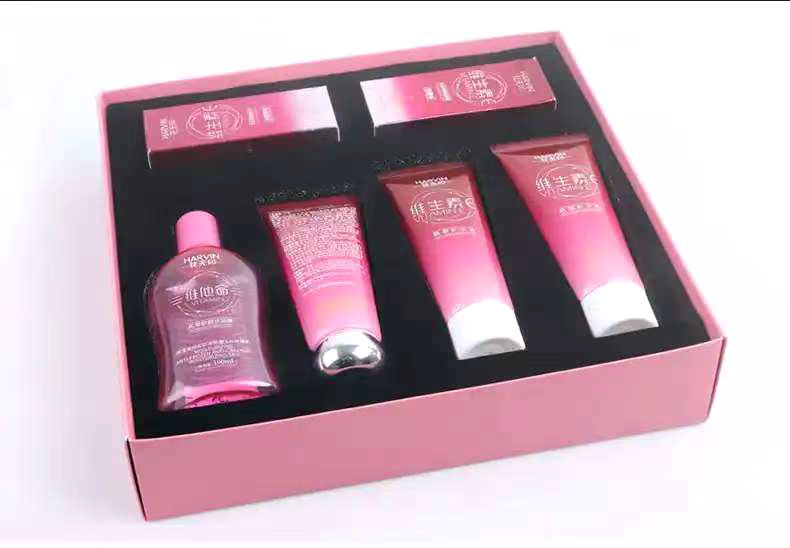
Start With the Complete Cosmetic Set, Not an Empty Gift Box
The first quotation should be based on the final saleable set. List every bottle, tube, jar, applicator, charger, booklet and accessory that must be packed. A cavity designed around one component without considering the surrounding items can force an inefficient layout or leave fragile closures close to the box wall.
Tell the EPE foam supplier whether each product will be filled or empty during shipping. Filled glass bottles are heavier than development samples, flexible tubes may change shape when full, and pump heads can add both height and a vulnerable protrusion. The production sample should represent the actual shipping condition as closely as possible.
Why Custom EPE Foam Works for Beauty Gift Box Inserts
Expanded polyethylene foam is lightweight, resilient and available in laminated layers. A die-cut or fabricated insert can separate products, absorb handling shocks and create an orderly unboxing layout. White EPE is often selected for a clean technical appearance, while black foam can create strong contrast around colorful retail products. Color is a presentation choice; performance depends on the verified material, thickness and geometry.
A beauty gift box insert should not be described only by its outside length and width. Buyers should also define total thickness, cavity depth, bottom cushioning, wall width between products, removal features and any lid pad or top sheet. These details determine whether the set looks secure or arrives with components lifted out of position.
Build a Product Dimension and Tolerance Table
Measure the maximum length, width and height of every SKU. For round containers, record the maximum diameter, body diameter and closure diameter. For tapered or irregular parts, provide a dimensioned drawing or 3D file and identify the surfaces that may contact foam. The factory should know whether a label, shrink sleeve, cap seal or protective bag will be present in production.
Do not base the cavity only on one perfect sample. Injection-molded caps, glass bottles and filled tubes can vary within an approved range. State the known production tolerance or provide several parts from different lots. The insert must hold the largest acceptable part without excessive compression while still controlling the smallest acceptable part.
Control Bottles, Tubes, Jars and Pumps Differently
Beauty sets often combine components with very different shapes. A cylindrical bottle may be supported at its body, while a soft tube may need a broad cavity that avoids crushing printed panels. Jars usually require easy finger access because the product is short and sits below the foam surface. Pumps and droppers need clearance around the actuator or glass pipette assembly.
Ask the supplier to identify the intended support surfaces on the drawing. The cavity should control movement without loading a fragile cap, nozzle or decorative shoulder. If a pump must be locked, bagged or supplied with a separate clip, design around that final condition rather than relying on foam pressure to hold the actuator.

Plan a Layout That Supports Packing and Presentation
Arrange Products in the Customer-Visible Orientation
Define which label faces upward and where the set is opened. For a presentation box, the factory may need to rotate cavities so logos align in one direction. Add orientation marks or an asymmetric cavity when operators could insert a part backward. A drawing with numbered positions prevents misunderstandings during sampling.

Leave Enough Foam Between Heavy Components
Narrow walls save space but may split, fold or allow two products to touch. The required divider width depends on component weight, cavity depth, foam grade and the direction of expected loads. A heavy glass serum bottle should not share a weak divider with a small plastic applicator merely to achieve a compact layout.
Add Removal Features Without Exposing the Product
Finger notches, side reliefs or pull ribbons can improve the unboxing experience. Their position should allow removal without scratching a decorated bottle or breaking a thin wall. The sample review should include actual packing and unpacking by people who will use the finished set, not only a visual inspection on a desk.
Protect Printed, Coated and Reflective Surfaces
Foam contact must be reviewed for matte coatings, metallic decoration, soft-touch finishes, screen printing and labels. If appearance is critical, the buyer may specify a protective bag, tissue, nonwoven liner or film between the item and the foam. The cavity is then designed around the protected product, including the thickness and folds of that additional layer.
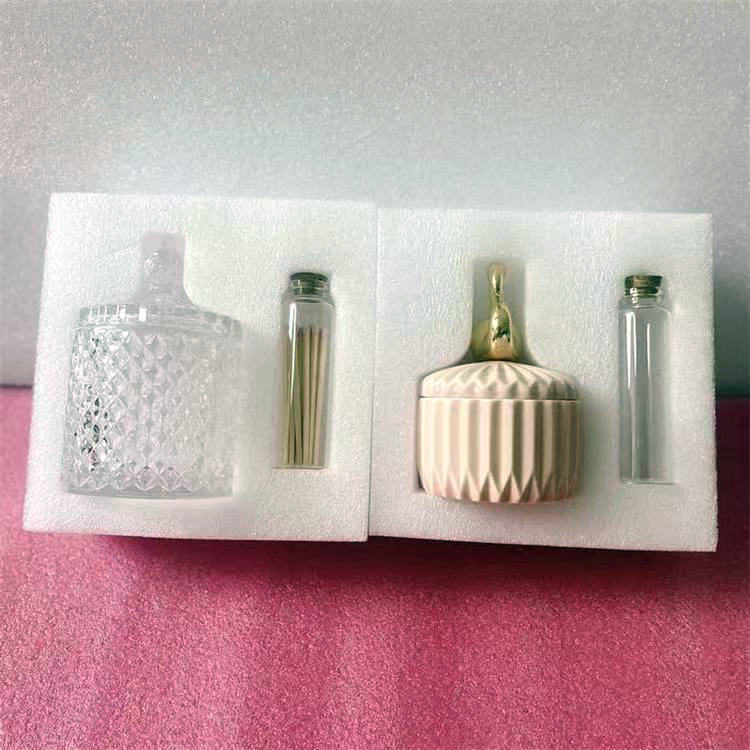
Do not assume that a foam color proves a material property. If the project requires low odor, restricted-substance documentation, antistatic behavior or another verified characteristic, put the requirement in the RFQ and request the relevant material declaration or test report for the offered grade.
Choose Foam Thickness and Layer Construction
Many custom cosmetic inserts are built from multiple EPE layers. A base layer provides bottom cushioning, a die-cut middle layer forms the cavities and a top frame can improve retention or presentation. Laminated construction also makes it possible to create stepped depths for short and tall products in the same set.
As explained in our EPE foam thickness and clearance guide, more foam is not automatically better. Excessive thickness can increase box size and freight cost, while insufficient bottom clearance can place a heavy bottle too close to the carton. Evaluate the insert together with the rigid box, folding carton or shipping carton and define the minimum foam remaining under the deepest cavity.
Match the Insert to the Gift Box and Shipping Carton
Provide the internal dimensions of the actual box, not only its advertised size. Rigid gift boxes may vary at wrapped corners, and paperboard liners can reduce usable space. State whether the insert is loaded from the top, slid into a sleeve or assembled with a separate lid pad. The insert should sit flat without bowing the box walls.
A beautiful retail box may still need a corrugated shipping carton, dividers or master-carton cushioning. Define units per master carton, carton orientation, gross weight and distribution route. The retail insert and export carton should be evaluated as a complete system because damage can originate from movement between gift boxes as well as movement inside one set.
Use a Structured Sample Approval Process
A useful prototype answers measurable questions. Check every cavity with production-representative items; verify label orientation, removal access, bottom clearance and closure protection; then place the assembled insert in the real box. Record any change on a marked drawing rather than approving modifications through informal photographs alone.
If transit testing is required, define the packed configuration, conditioning, drop or vibration method and acceptance criteria before testing. A sample that looks good is not evidence of a particular performance level. Buyers should approve the final structure after the relevant product and carton tests for their own route.
Send a Complete RFQ to the EPE Foam Factory
A complete custom cosmetic foam packaging request should include:
- one part list showing the quantity of each component per set;
- dimensioned drawings, 3D files or clear multi-angle photos;
- part tolerances and filled production weights;
- contact restrictions for labels, coatings and delicate finishes;
- gift-box internal dimensions and master-carton information;
- preferred foam color, thickness and any documented material requirement;
- annual demand, order quantity, delivery schedule and destination;
- sample quantity, test plan and approval responsibility.
Use a complete EPE insert RFQ and ask the factory to separate one-time tooling or development charges from unit pricing and to identify the assumed foam specification. Quotes are easier to compare when every supplier prices the same revision, quantity and packaging scope.
Define Bulk-Order Quality Checks
Before mass production, approve a reference sample and controlled drawing. Incoming inspection can cover outside dimensions, total thickness, cavity position, visible lamination, cleanliness, odor expectations and fit with representative products. Cosmetic packaging also benefits from a presentation check under consistent lighting.
Specify how nonconforming inserts will be handled and how changes are controlled. A substitute foam grade or unapproved cavity adjustment can affect both fit and appearance. Purchase orders should reference the approved drawing number, revision and sample date.
Understand the Main Cost Drivers
Unit price is influenced by foam volume, grade, color, number of layers, cutting complexity, bonding steps, scrap rate, order quantity and packing method. Very tight cavity spacing can increase processing difficulty. Multiple small accessories may require more cutting and manual assembly than one large bottle cavity.
To reduce total cost, optimize the full pack rather than removing protection blindly. A slightly different layout may reduce sheet waste or box size without weakening critical support. The buyer and factory should compare alternatives using the same product set and transport assumptions.
Turn the Article Into an Actionable Packaging Inquiry
If you are sourcing custom EPE foam inserts for a skincare kit, personal-care device or cosmetic gift box, send the complete product list, dimensions, weights, box size, order quantity and destination. Hongying can review cavity layout, foam construction and sampling requirements for a production quotation.
A clear inquiry should name the project, required quantity and approval deadline. Attaching drawings or photos at the first contact helps the factory respond with specific technical questions instead of a generic price range.
Frequently Asked Questions
Is EPE foam suitable for luxury cosmetic gift boxes?
It can be suitable when its appearance, odor, surface contact and retention are approved with the real products and box. Premium presentation may also require a liner, fabric wrap or other decorative layer.
Can one insert hold bottles, tubes and an electronic beauty device?
Yes, but each component should have its own support strategy, tolerance and removal feature. Heavy devices and fragile cosmetic bottles should not rely on the same narrow divider without evaluation.
Should the cavity be tighter than the bottle?
Not automatically. The correct allowance depends on part tolerance, foam response, required retention and surface sensitivity. Approve the fit with parts from more than one production lot.
Can black or white pearl cotton be specified?
Both colors are commonly requested. Color should be defined separately from performance or compliance properties, which require documentation for the offered material grade.
What is needed for a fast quotation?
Send component dimensions, weights, photos or drawings, box internal size, quantity, delivery destination and any material or testing requirement. A physical sample may be needed before final tooling.
How should buyers approve a production sample?
Check fit, orientation, removal, surface contact, box assembly and the complete packed system. Record the approved revision and retain a signed or otherwise controlled reference sample for bulk inspection.