Sample tubes are small, but a bulk packaging error can affect hundreds of positions in one shipment. A rack with the wrong hole diameter may release tubes during handling, hide labels or grip closures instead of the tube body. Custom EPE foam racks for test tubes should therefore be specified as precision transport packaging, not ordered from a photograph alone.
This B2B guide is for laboratory supply companies, diagnostic-kit assemblers, consumable distributors and contract packers sourcing pearl cotton foam packaging. It explains how to define tube sizes, rack geometry, cleanliness, cartons and quality checks so an EPE foam supplier can prepare a relevant quotation and sample.

Define the Packaging Function Before Choosing a Hole Pattern
State whether the EPE rack is used for empty tube transport, filled sample-kit distribution, internal factory handling or presentation inside a diagnostic kit. The same grid can behave differently when tubes are empty, liquid-filled or fitted with heavy caps. The rack may be a shipping insert, a temporary organizer or one layer in a complete case.
Describe how the rack will be lifted, tilted and packed. If tubes must remain upright, the structure may require a deeper locating layer, a bottom pad and a top restraint. If the rack is only a separator inside a closed carton, a thinner sheet may be possible. The complete package determines the requirement.
Create a Tube Schedule for Every Diameter and Height
Laboratory projects often include several tubes that look similar but have different outside diameters, cap widths or lengths. Prepare a table for every tube type and record maximum body diameter, cap diameter, total height, filled weight and approved manufacturing tolerance. Identify whether labels or barcodes extend beyond the body surface.
Provide samples from normal production when possible. A hole developed around one nominal tube may be too tight for the upper tolerance or too loose for a smaller lot. If more than one tube size uses the same rack, mark the positions on a drawing and use a clear color or number code for packing operators.
Choose the Correct Retention Point
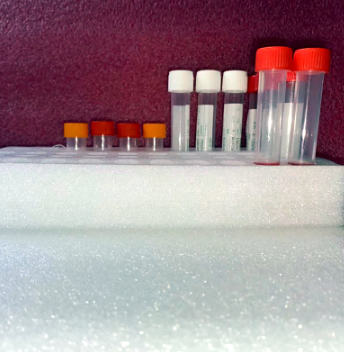
A round hole can contact the tube body, the shoulder or the closure. The intended contact zone should be stated because loading the cap can loosen it, obstruct a tamper-evident feature or place stress on a thin wall. For tapered tubes, the rack may locate the wider body while leaving clearance around the closure.
The buyer should define whether the tube needs friction retention or simply lateral separation. Friction may help a rack remain loaded during manual handling, but excessive compression can make tubes difficult to remove or damage labels. A sample trial should include insertion and removal at the expected operating temperature.
Calculate Hole Diameter, Pitch and Edge Distance
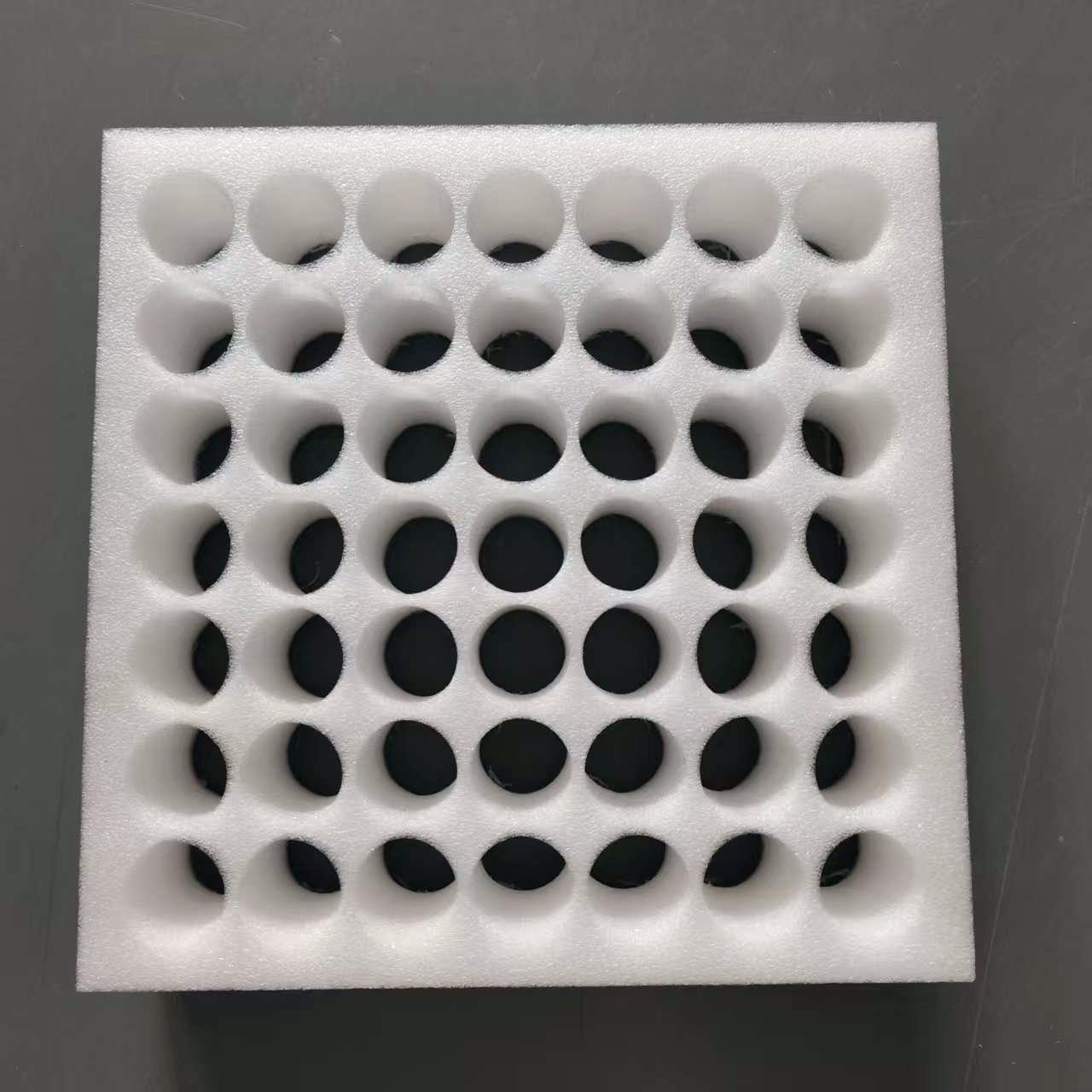
Hole diameter is only one part of the layout. As shown in our multi-cavity EPE foam tray guide, pitch is the center-to-center distance between positions; it controls the foam wall between adjacent holes and determines overall rack size. Edge distance affects whether outside rows tear or deform when a loaded rack is lifted.
Ask the factory to show hole diameter, row and column count, pitch, outside dimensions and orientation on one controlled drawing. The design should also identify any different-size positions. This makes it possible to verify the rack with gauges and representative tubes instead of relying on an unscaled photo.

Design the Rack as a Layered Structure
Use a Top Locating Layer for Position Control
The top layer establishes the hole pattern and separates closures or tube bodies. Its thickness must be sufficient to resist tearing at the narrowest walls. For closely spaced small tubes, the supplier may need to adjust material thickness, pitch or cutting method to maintain stable dividers.
Add a Lower Support Layer When Tubes Must Stay Upright
A second locating layer or recessed bottom can reduce tube lean. The vertical distance between locating points matters: two thin layers placed too close together may not control a tall tube. The support should avoid concentrated pressure on pointed or fragile tube bases.
Use a Top Pad or Lid Restraint for Shipping
If the carton can invert, a lid pad may keep tubes from rising out of the rack. Define the clearance above the tallest closure and account for carton compression. The pad should restrain movement without pressing directly on caps unless that loading condition has been approved.
Decide Between One-Size and Mixed-Size Racks
A one-size grid is simple to inspect and can be efficient for high-volume consumables. A mixed-size rack can reduce the number of packaging components in a diagnostic kit, but it requires clear orientation and a controlled loading plan. An asymmetric corner, printed map or numbered diagram can help prevent tube placement errors.
If future kit revisions are expected, discuss modular sections or separate removable pads. A universal rack with excessively loose holes may create more risk than maintaining two controlled sizes. The best choice depends on SKU stability, pack-line process and order volume.
Protect Labels, Barcodes and Tamper Features
Specify where labels begin and end, whether they can tolerate foam contact and which barcode area must remain visible. A rough or tight hole edge can mark a paper label or catch a film label during removal. Tubes with peel tabs, tamper bands or vented closures may require extra clearance.
If traceability is important, confirm whether operators scan tubes while they remain in the rack. Hole spacing, tube height and row access can affect scanner visibility. The packaging drawing should align with the actual inspection and picking process.
Specify Cleanliness and Material Documentation
EPE foam is a packaging material; it should not be assumed to be sterile, cleanroom qualified or suitable for direct contact with biological samples. State the required cleanliness level, packing environment, bagging method and documentation in the RFQ. The supplier can then confirm whether the requested controls are available.
If the project is regulated, the buyer remains responsible for defining applicable requirements and validating the complete package. Ask for material declarations, restricted-substance information or lot traceability only when relevant, and verify that the documents refer to the exact foam grade quoted for production.
Match the Rack to the Bag, Kit Box and Master Carton
Provide the internal dimensions of the immediate container. A rack placed in a sealed bag needs allowance for film folds; a rack in a rigid kit box needs clearance at wrapped corners. State whether multiple racks stack and whether tubes project above the foam.
For distribution, define units per master carton, gross weight, carton orientation and expected pallet pattern. If racks are stacked, show how the upper layer is supported so it does not load tube closures below. Carton dividers or interlayers may be needed even when each rack controls its own tubes.
Evaluate Packing-Line Ergonomics
Packaging efficiency affects total purchase cost. Operators should be able to identify the correct orientation, load tubes without forcing them and remove a completed rack without tearing the edge. Review hand access, bench footprint and the method for transferring the rack into a bag or carton.
If automation is planned, provide tolerances for outside dimensions, flatness and reference edges. A manually acceptable foam rack may not locate consistently in an automated nest. The manufacturing drawing should distinguish functional dimensions from general dimensions.
Approve a Representative Prototype
Test the prototype with tube samples across the approved tolerance range. Load every position, not only the corners. Check retention, lean, cap clearance, label condition and removal force. Assemble the complete package and evaluate it in the orientations expected during handling.
When a formal transport test is required, define the method, packed configuration and acceptance criteria. Do not convert a visual sample approval into an unsupported performance claim. Keep photographs, measurements and the final approved drawing linked to one revision.
Prepare a Complete Laboratory Packaging RFQ
For a useful custom EPE foam tray quotation, send:
- a tube schedule with dimensions, tolerances and filled weights;
- required row and column count for each tube size;
- preferred rack outside dimensions or container internal dimensions;
- required tube orientation and permitted projection above the rack;
- label, barcode, cap and tamper-feature clearance;
- cleanliness, bagging, documentation and traceability requirements;
- stacking, master-carton and pallet information;
- sample quantity, annual demand, order quantity and destination.
Follow the EPE packaging quotation checklist and ask the supplier to identify the quoted foam grade, total thickness, layer construction, cutting process and any one-time development charge. Quotes should be compared against the same drawing revision and order quantity.
Establish Bulk Quality-Control Points
Production inspection can include outside length and width, total thickness, hole diameter, pitch, row count, edge distance, lamination condition and visible cleanliness. A go/no-go gauge or approved tube set can make fit checks faster. Define sampling frequency and acceptance criteria before the first bulk order.
Changes to foam grade, sheet thickness or hole geometry should require written approval. Even when outside dimensions remain the same, a material substitution can alter retention and recovery. Retain a controlled golden sample for comparison.
Understand Price and Tooling Drivers
Cost depends on rack size, foam thickness, layer count, hole quantity, pitch, cutting complexity, scrap rate, order volume and packing method. Very dense grids may require slower cutting or wider spacing. Mixed-size patterns and multi-layer alignment can add manufacturing steps.
Optimize cost by confirming the required capacity and carton footprint together. A different row count may improve sheet yield or carton utilization. Cost reductions should be evaluated with loaded racks so critical wall strength and tube retention are not lost.
Request a Production-Oriented Review
Buyers sourcing EPE foam packaging for laboratory tubes can send Hongying the tube schedule, drawings, capacity, box dimensions, quantity and destination. The factory can review the hole pattern, layered construction and sample plan before issuing a production quotation.
Include the target approval date and describe how the rack is used. A specific project brief helps an EPE packaging manufacturer answer with a technical proposal rather than a generic price per sheet.
Frequently Asked Questions
Can one EPE rack hold several tube diameters?
Yes, when each position is dimensioned and clearly identified. Mixed layouts need orientation control and should be tested with the full tolerance range of every tube.
How tight should the test-tube holes be?
The correct fit depends on tube tolerance, required retention, label sensitivity and foam response. It should be approved with real tubes rather than selected from a fixed percentage alone.
Does EPE foam make a rack sterile?
No. Packaging material should not be described as sterile unless a validated process and supporting documentation apply to the finished package. State cleanliness and bagging requirements separately.
Can tubes be shipped upright in one foam layer?
Sometimes, but tall or heavy tubes may need a second locating layer, recessed base or top restraint. Evaluate the complete package in expected handling orientations.
What information is needed for a quotation?
Provide tube dimensions and tolerances, capacity, outside size, container dimensions, layer requirements, cleanliness controls, quantity and shipping destination.
How should a buyer inspect a bulk rack order?
Use a controlled drawing, approved sample and representative tube set. Check dimensions, hole pattern, fit, lamination, cleanliness and any required packing or traceability information.