Automotive components move through long supply chains before reaching an assembly line. A sensor can lose calibration, a machined face can scratch, a connector pin can bend and a painted part can rub against its neighbour. Custom EPE foam packaging for automotive parts helps control position and separation when the design is based on the component, tote, line-side process and transport route.

This guide is for European Tier 1 and Tier 2 suppliers, OEM procurement teams, aftermarket distributors and contract manufacturers. It explains how pearl cotton trays, separators, blocks and inserts are used and what Hongying’s 3,000+ m² EPE packaging facility needs to quote a repeat programme.
Common Automotive Uses for EPE Packaging
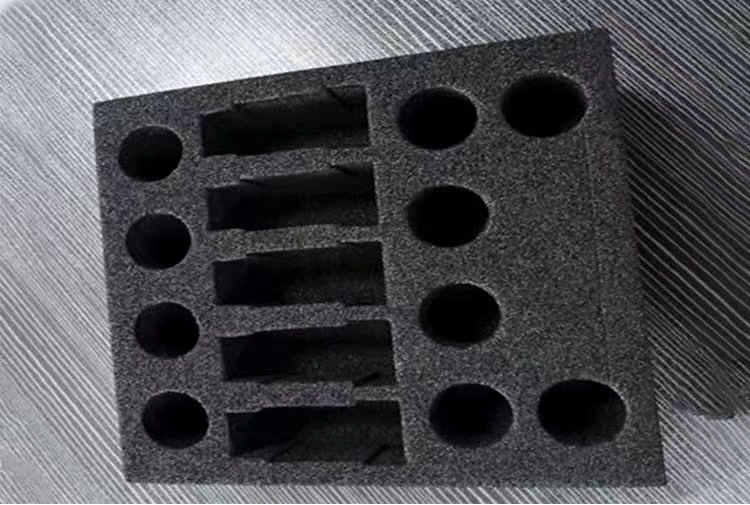
Applications include sensors, connectors, switches, brackets, trim parts, machined housings, small motors, pumps, valves, lighting components, service parts and subassemblies. The correct form may be a multi-cavity tray, slotted divider, end cap, top pad or removable locating block.

One-way export cartons and closed-loop KLT totes require different designs. State where the packaging starts and ends, how many handling transfers occur and whether empty containers return. Do not describe an insert as reusable without a real inspection and reverse-logistics plan.
Line-side presentation
Defined part positions can help operators count components and pick them in sequence. Orientation features can prevent reverse loading. The tray should fit the workstation and allow removal with the gloves and motions used on the assembly line.
Export and aftermarket supply
Service parts may travel through parcel and distribution networks rather than stable factory loops. The insert must integrate with the final carton, labels and accessory set. Test the route that the actual part will experience.
Develop Cavities Around Production Tolerances
Send controlled drawings and representative production samples. Include maximum and minimum dimensions, weight, centre of gravity and temporary caps or films. Mould gates, flash, welds, clips and protective coatings may change the real packed outline.
The smallest accepted part should remain retained, while the largest should load without excessive force. If several manufacturing sites supply one part number, test the variation from each source before freezing the foam drawing.
Mark Support and No-Contact Areas
Identify robust load-bearing regions and sensitive features such as connector pins, sealing faces, lenses, threads, labels, painted Class-A surfaces and calibration points. The cavity should transfer load through approved structure and leave clearance around fragile areas.
A visually close outline can still be unsafe if it presses a switch or seal. Show intended contact zones on the drawing. During sampling, inspect pressure marks and surface rubbing after the complete transport test.
Protect cosmetic surfaces
High-gloss plastic, paint, chrome and soft-touch finishes require compatibility checks with the exact production surface. A bag, film or nonwoven liner may be necessary. Design the cavity around the final wrapped condition.
Control Pitch and Divider Strength
For multi-cavity trays, specify row count, column count, centre-to-centre pitch, minimum divider width and edge distance. Thin walls can tear or allow parts to touch when a loaded tray bends.
Calculate parts per layer, layers per tote, totes per pallet and parts per shipment. More cavities are useful only if the tray remains strong and ergonomic. Heavy metal parts may need fewer positions or a reinforced base.

Manage Oil, Dust and Sharp Edges
State whether parts carry cutting fluid, rust preventive, grease or cleaning residue. Test compatibility using the actual chemical, concentration, temperature and contact duration. General material statements do not replace project testing.
Burrs, stamp edges and threaded studs can cut foam. Add clearance, protective caps or replaceable wear zones. Define acceptable particles and contamination if parts enter a controlled assembly process.
Choose Standard or ESD-Controlled Material
Standard EPE can provide mechanical cushioning and separation. Electronics, sensors or exposed assemblies may require an electrostatic-protection plan. The buyer should define material category, resistance range, test method, conditioning and retest frequency.
Black or pink colour alone does not prove ESD performance. Request documentation for the exact grade and prohibit unapproved substitution. ESD bags, grounding and handling controls may still be necessary.
Fit KLT Totes and Racks Correctly
Use the actual usable tote dimensions, including ribs, corner radii, handles, label pockets and lid intrusion. The EPE insert should locate without bowing and remain removable for cleaning or replacement.
If trays stack directly, define the load path. Upper layers should not rest on components unless the product engineer has approved and tested that condition. A tote shoulder, tray rim or separator can carry vertical load.
Design for safe handling
Calculate the fully loaded tray weight. Finger notches and lifting points should help operators without weakening critical walls. Observe packing and line-side unloading before approval.
Use EPE End Caps for Larger Components
Motors, control modules, lamps and larger subassemblies may use left/right end caps or corner supports instead of a full tray. Material is placed at structural load paths while fragile faces remain clear. This can reduce volume compared with a solid block.
Provide product orientation, centre of gravity and carton or rack dimensions. Validate lateral control, top restraint and bottom cushioning in all required transport directions.
Plan Returnable Packaging Life
For a closed loop, define expected cycles, cleaning method, inspection interval and replacement criteria. Test loaded cycling and inspect compression set, bond failure, cavity growth, contamination and loss of retention.
Record insert part number, revision and service condition. Physical durability does not by itself prove a legal reuse system; the operator must document collection, return and rotation according to applicable requirements.
Validate the Complete Automotive Pack
First article fit
Load every cavity with smallest and largest approved parts. Check orientation, insertion, removal, rocking, surface contact and divider deflection.
Full-container handling
Build the intended tote or carton stack. Lift, turn, stack and access it as operators will. Inspect edge cavities and the lowest layer.
Distribution or route trial
The buyer should define drop, vibration, compression, impact or monitored route tests. Acceptance criteria should include component damage, cosmetic marks, movement and foam failure.
Control Bulk Production
Identify critical dimensions, cavity position, material grade, thickness, layer alignment, bond integrity, colour and cleanliness. Agree measurement methods and a sampling plan. Use a master sample and clear revision history.
For production launches, share annual demand, normal monthly call-off, peak build, SOP date and programme life. A China EPE automotive packaging manufacturer can plan capacity only when forecasts distinguish expected demand from firm releases.
European Documentation and PPWR Review
List material declarations, restricted-substance documents, ESD evidence or customer templates required for the exact project. Confirm that reports match the supplied grade, colour and formulation.
For PPWR planning, record packaging mass, composition, minimisation decisions and intended reuse system where applicable. EPE is not automatically compliant in isolation; the responsible economic operator assesses the complete packaging.
Support Aftermarket and Service-Part Programmes
Aftermarket packs often contain lower quantities per shipment, mixed accessories and a different distribution route from factory components. Define the complete service kit, retail or shipping carton, label visibility and parcel-handling risk. A cavity approved for a high-volume KLT loop may not be suitable for an individual courier shipment.
For long-running spare-part supply, control obsolescence and product substitutions. A new connector, cap or housing revision can change fit even when the sales part number remains similar. Link the packaging revision to the component revision and keep a small approved sample set for future repeat orders.
Compare Automotive Packaging Suppliers
Ask each supplier to quote the same drawing, foam grade, quantity tier, packing method and Incoterm. Review how samples are approved, how critical dimensions are measured and how changes are communicated. Facility size matters only when production planning and quality control support the promised programme.
A strong quotation identifies pieces per carton, carton dimensions and batch assumptions. This lets procurement compare landed cost and storage, not only tray price.
Information for an Automotive Packaging RFQ
- part drawings, tolerances, weights and production samples;
- fragile features, sealing faces and cosmetic surfaces;
- caps, bags, oil, labels and the final packed condition;
- one-way carton or returnable tote dimensions;
- cavities per layer and parts per shipping unit;
- material, ESD, cleanliness and document requirements;
- validation standard and acceptance criteria;
- annual volume, call-offs, SOP date and peak forecast;
- European plants or distribution destinations;
- Incoterm, pallet and delivery-frequency requirements.
Request an Automotive Parts Packaging Review
Send Hongying your part drawing, tote or carton, annual forecast and destination through the custom EPE foam quotation form. The team can review cavity layout, sample information and bulk tiers. Also see the returnable KLT tote insert guide.
Frequently Asked Questions
Can one EPE tray fit several automotive part variants?
Sometimes. Every approved variant and tolerance condition must remain controlled. Universal cavities may reduce packaging part numbers but can reduce retention or packing density.
Is black EPE automatically antistatic?
No. Colour is not an ESD specification. State the electrical requirements, test method and documents for the exact material.
Can oily machined parts be packed directly in EPE?
Only after compatibility and cleanliness review using the actual oil, temperature and contact time. Additional bags or caps may be required.
What information helps attract bulk pricing?
Provide annual volume, realistic release quantities, parts per tray, full packing configuration, destination and launch schedule. Ask for comparable quantity tiers and freight assumptions.