Buyers searching for custom protective packaging often ask four questions first: What is the MOQ? Can I get a sample? Is there a tooling charge? How long will production take? The correct answers depend on the insert size, material, cutting process, assembly work and order plan. This guide explains custom EPE foam inserts MOQ, sampling, development costs and lead-time factors for B2B purchasing.
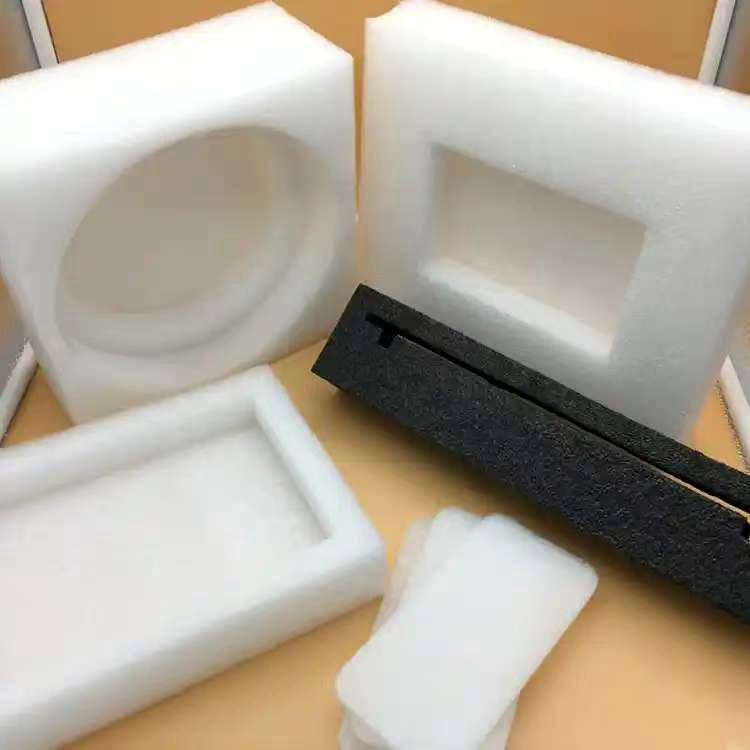
It is written for OEMs, importers, packaging distributors and product teams that need a quote they can compare. The goal is to prevent a low headline price from hiding a different construction, incomplete testing or unrealistic delivery assumption.
Why There Is No Universal MOQ for Custom EPE Inserts
A minimum order quantity can be driven by raw-material format, cutting setup, tool cost, bonding labour, packing method or freight efficiency. A simple flat pad may be practical in a smaller batch than a multi-layer tray with several operations.
Buyers should ask for the economic quantity and the minimum practical trial quantity separately. A supplier may be able to produce fewer pieces, but the setup cost per unit will be higher.
MOQ Versus Annual Forecast
One purchase order does not always show the real opportunity. If a buyer needs 2,000 pieces each quarter, the factory may plan the project differently from a one-time order of 2,000. Share annual volume, release size and expected frequency.
Prototype Quantity
A prototype order validates geometry and handling. It is not representative of mass-production unit cost because programming, cutting and inspection are spread across very few parts.

Pilot Quantity
A pilot batch can test the production process, packing line and logistics before a large release. It should use the intended production material and controlled drawing where possible.
Mass-Production Quantity
The volume price assumes an agreed construction, stable product data and a production method suited to the quantity. Quantity breaks should state exactly what changes at each level.
What an EPE Foam Insert Sample Should Prove
An EPE foam insert sample should answer specific questions. Does the product fit? Are fragile areas clear? Can operators load and remove it safely? Does the insert fit the real carton? Does the complete pack pass the required transport test?
A sample that merely looks similar is not an approval standard. Define the purpose of each sample round and record the result.
Information Required Before Sampling
Provide product drawings, maximum dimensions, weight, contact restrictions, carton dimensions and the intended number of parts per pack. Include cables, caps, labels, bags and accessories in the transport configuration.
If CAD data is not available, send physical samples and mark the important surfaces. Measure several production pieces so the cavity accounts for normal variation.
Prototype Methods and Production Methods
Prototype parts may be CNC-cut, manually assembled or produced with temporary methods. Volume parts may use die cutting or a different sequence for speed and repeatability. Ask the supplier to explain any expected difference in edge finish, tolerance, bonding or compression.

Digital or CNC Prototype
This route can be useful for early fit checks and design changes. It may avoid production tooling during the first sample round, depending on the geometry.
Production-Process Sample
After geometry is stable, a sample using the intended mass-production process verifies tool output, layer alignment and inspection points. This sample is a stronger basis for the golden standard.
Understanding EPE Foam Packaging Tooling Cost
EPE foam packaging tooling cost can include cutting dies, fixtures, programming, gauges or other project-specific preparation. Not every design needs the same tooling, and a prototype charge is not always the same as a production-tool charge.
Ask the quotation to separate one-time and recurring charges. Confirm what the tooling produces, which revision it supports, how long it is expected to remain usable and what happens after a design change.
Who Owns the Tool and Approved Design?
Commercial terms should state how project tools and digital files are identified and used. Buyers may also ask whether a paid tool is stored for repeat orders and how inactivity or damage is handled.
This does not require a complicated agreement for every small project, but ambiguity can create delays when a programme restarts after several months.
What Determines Sample Lead Time
Sample timing begins after the supplier has usable information. Missing product dimensions, uncertain box size and unconfirmed material can consume more time than cutting the foam itself.
Design Review Time
The factory checks product orientation, support zones, cavity spacing, layer construction and manufacturability. Complex kits may need several layout options before cutting.
Material Availability
Common grades and colours may be available sooner than special-performance or unusual-colour materials. If a property is mandatory, allow time for the correct material rather than substituting by appearance.
Physical Shipment Time
A buyer sending the product to the factory and receiving a sample back must include courier and customs time. Digital approval can shorten some stages but cannot replace physical testing where fit and fragility are critical.
What Determines Production Lead Time
Production lead time depends on material planning, tool readiness, process steps, order quantity, inspection and packing. It should be quoted from a defined approval point, such as receipt of deposit and signed sample approval.
Seasonal capacity, national holidays, quantity changes and late design revisions can affect the schedule. Buyers should request a milestone plan for time-sensitive launches.
How Product Changes Affect Cost and Schedule
A small product change can move a connector, widen a lid or alter the safe support area. Even when the outer dimensions remain similar, the insert may need a new cavity or tool.

Use revision-controlled drawings and state the final change date. The supplier should review whether existing samples, tooling and price remain valid after each change.
Price Breaks and Total Landed Cost
Request prices at realistic quantity levels, for example pilot, standard release and forecast peak. Each price should use the same material, construction, inspection and commercial term.
Unit price is only one part of landed cost. Finished EPE parts are lightweight but occupy volume, so cartons, palletisation and freight can materially affect the result. A denser shipment configuration may be valuable if it does not deform the inserts.
When a Low MOQ Makes Sense
Lower quantities can suit product launches, service spares, expensive instruments and market trials. The buyer accepts higher setup cost per unit in exchange for reduced inventory risk.
The design can be prepared for later scale by using a controlled drawing and recording which prototype features must transition to a production process.
When a Bulk Order Is More Efficient
Volume production can improve material planning, tool utilisation and inspection efficiency. It may also reduce the number of international shipments. However, ordering too much before the product design is stable creates obsolete packaging risk.
A blanket forecast with scheduled releases can sometimes balance price and inventory, subject to agreed commercial terms and storage responsibility.
Quality Approval Before the First Large Order
Dimension and Fit
Approve overall size, cavity dimensions, depth, spacing, total height and fit inside the actual outer container. Use production products that represent dimensional variation.
Appearance and Construction
Define material colour, edge quality, layer order, bonding, cleanliness and allowable alignment offset. Do not rely only on a photograph for colour or texture.
Performance
Complete-pack testing should match the product risk and distribution route. Record product function, cosmetic condition and packaging movement after the test.
Questions to Ask in a Supplier Quotation
- What material grade and layer construction are included?
- What quantity is the unit price based on?
- Are prototype, tooling and production setup charged separately?
- Which process will make the sample and which will make volume parts?
- When does the quoted lead time begin?
- What approval is required before production?
- How are freight, packing and Incoterms handled?
- How long is the quotation valid?
RFQ Data That Speeds Up the Answer
A buyer should send:
- Product drawing, sample, weight and tolerance range.
- Fragile areas, safe supports and required removal access.
- Carton or case internal dimensions.
- Material property and appearance requirements.
- Prototype quantity and purpose.
- Pilot quantity, normal release and annual forecast.
- Target delivery date and destination.
- Required test and inspection criteria.
Send this information through the custom EPE foam insert quotation form. Hongying can then quote sample work, one-time costs and volume pricing against the same specification.
How Hongying Moves From Sample to Production
Hongying supports custom packaging projects from a 3,000+ m² factory. A practical sequence is RFQ review, layout proposal, sample cutting, buyer fit check, complete-pack testing, golden-sample approval and mass-production inspection.
Procurement receives a clearer answer when quantity and timing are shared early. Engineering receives a better sample when product risks and contact restrictions are explicit. Both are necessary for a project that moves into repeat production without avoidable redesign.
Frequently Asked Questions
Can I order one EPE insert sample?
A very small sample quantity may be possible depending on size, process and material. It will normally carry development and handling cost that is not representative of volume unit pricing.
Does every custom insert require a cutting die?
No. The method depends on geometry, quantity and required repeatability. Ask which process is proposed for prototype and mass production.
Can sample charges be deducted from a bulk order?
This is a commercial decision and should be agreed in the quotation. Do not assume that prototype work and production tooling are the same charge.
How can a buyer shorten lead time?
Provide complete drawings, real quantity forecasts, final carton data and fast sample feedback. Freeze revisions before tooling and reserve production against a clear approval milestone.