Premium tea, coffee, confectionery and specialty-food brands often invest heavily in tins, jars and printed gift boxes, yet the presentation can still fail if the containers move, collide or arrive out of alignment. Custom EPE foam inserts for tea tins can hold each container in a repeatable position, protect decorated surfaces and create an orderly unboxing experience for retail, distributor and corporate-gift programmes.
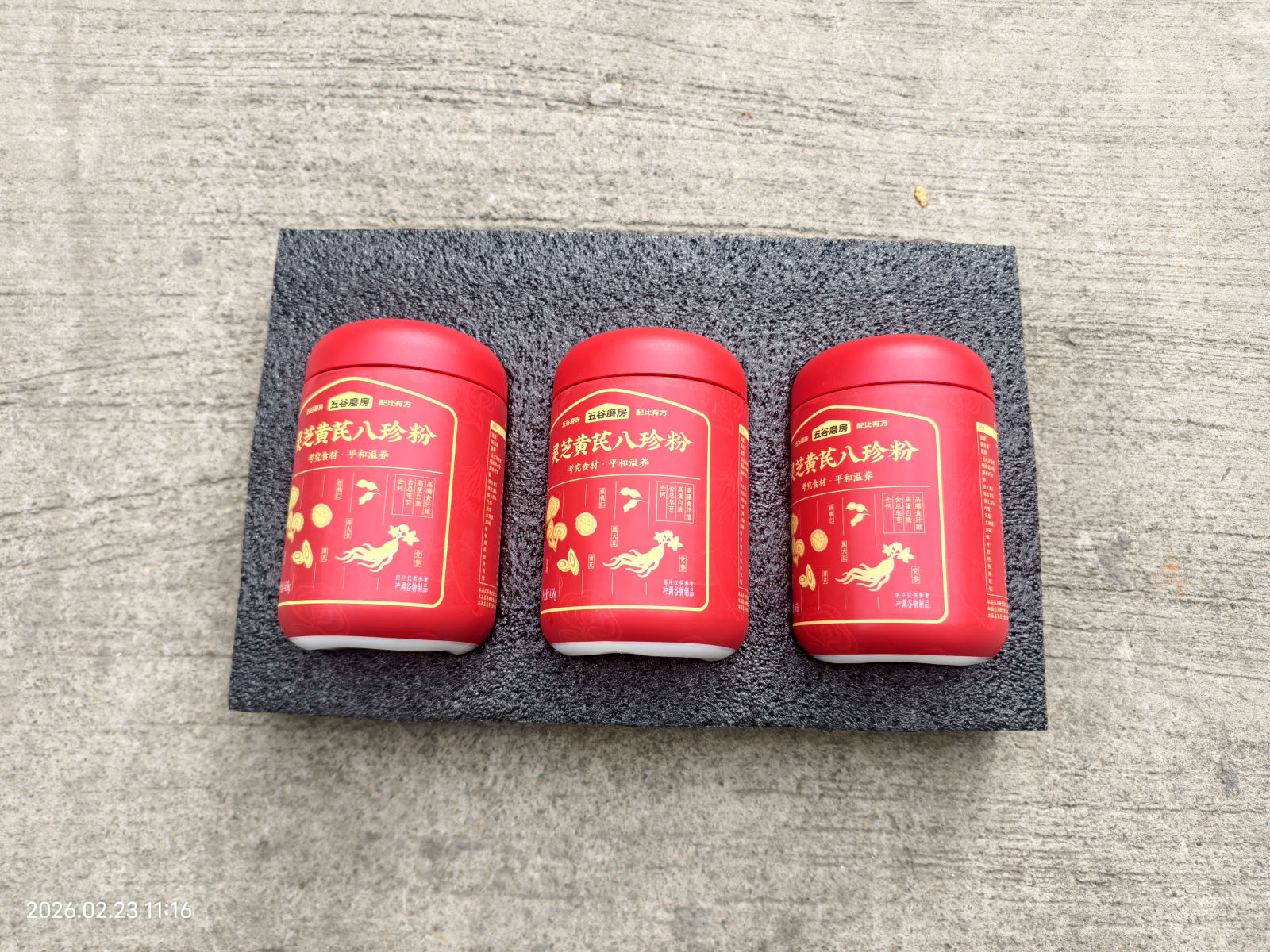
This guide explains how brand owners, contract packers and importers can specify a practical insert for multi-tin sets. It focuses on cavity fit, presentation height, carton integration, odour and food-contact boundaries, sample approval, bulk quality control and the information a factory needs for an accurate quotation.
Why Tea Tin Gift Sets Need More Than an Attractive Outer Box
A rigid gift box may look strong on a shelf but still leave a metal tin free to rattle during parcel handling. Repeated contact can scratch lacquer, dent a rim, loosen a lid or rotate labels away from the intended display angle. The insert therefore has two jobs: control movement during transport and maintain the visual arrangement promised by the packaging design.
For a three-tin set, the buyer should define whether all tins share one diameter and height, whether seasonal variants use the same insert, and whether the customer must lift a tin without pulling on its lid. These details affect cavity geometry and finger-access features.
Typical Products That Use EPE Gift-Box Inserts
Tea, Coffee and Powdered Drink Tins
Round and rectangular tins are common because they stack efficiently and offer a large branding surface. An insert can locate several SKUs in one presentation box while leaving space for brewing instructions, a measuring spoon or a printed card.
Confectionery, Spice and Specialty-Food Jars
Glass or rigid plastic containers require extra attention at the base, shoulder and closure. The foam should restrain the container without concentrating pressure on a fragile cap, tamper band or decorative label.
Corporate and Seasonal Gift Sets
Corporate programmes may combine tins with cups, infusers, spoons or small accessories. A modular layout can keep the main insert while changing a secondary pad for different campaign combinations, reducing the number of packaging versions to manage.
Start With the Actual Container, Not Only a Catalogue Diameter
Nominal dimensions rarely describe every production tolerance. Rolled seams, lid overhangs, embossed logos and shrink sleeves can create local high points. The supplier should receive physical samples or a controlled drawing that identifies the maximum outside dimensions and the surfaces that must remain untouched.
Measure several containers from normal production, not only one ideal prototype. If the diameter varies, the cavity must accommodate the upper limit without becoming loose around smaller units. A short trial run is useful when the packaging will serve more than one filling location.
Choose the Correct Cavity Geometry
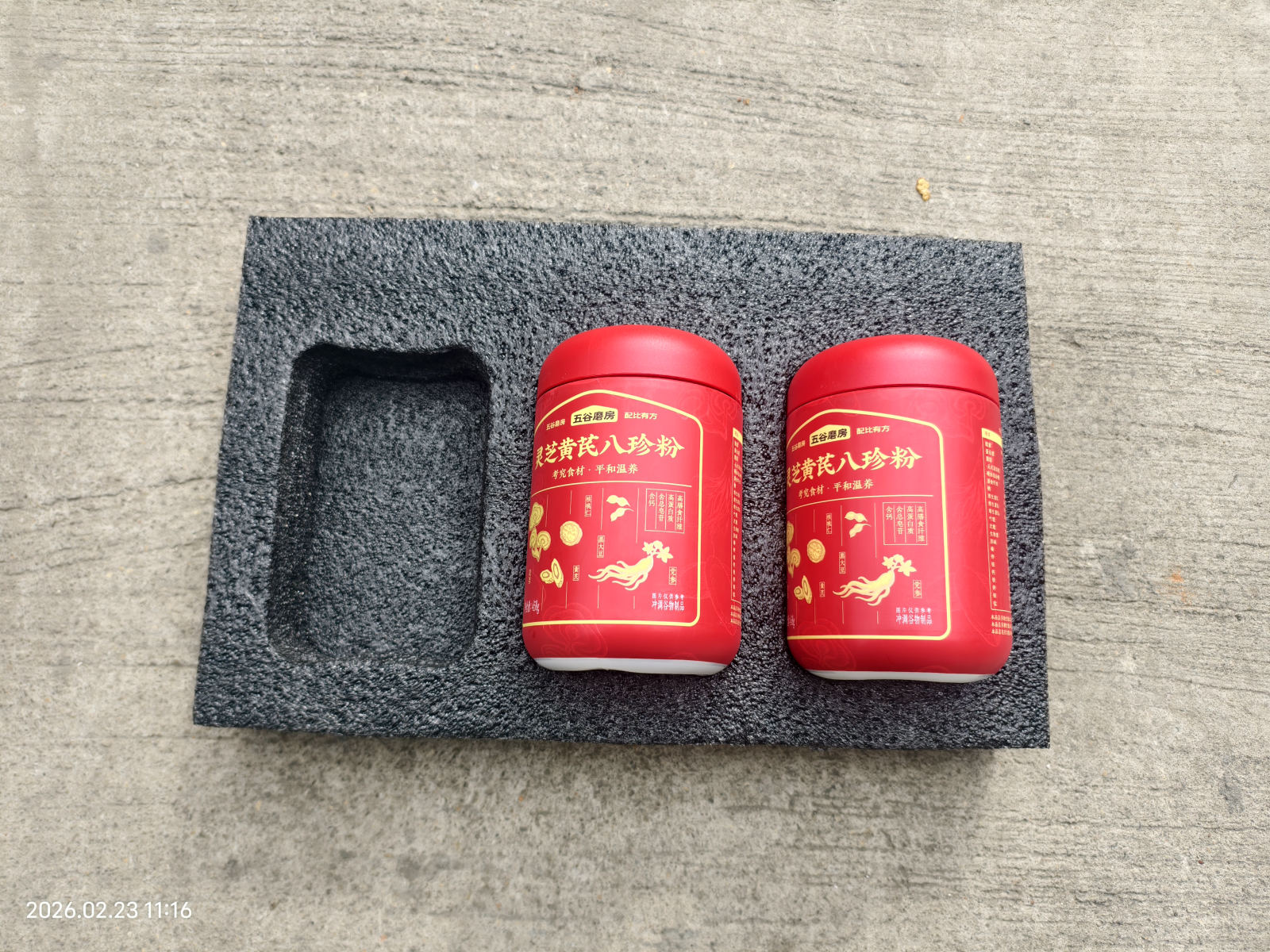
A circular cavity can be die-cut as a straight wall, stepped profile or partial cradle. Straight walls are simple, while a stepped opening can support the lower body and provide clearance around a wider lid. Side reliefs can help operators load tins without scuffing the print.
Retention Without Excessive Compression
The aim is stable positioning, not maximum squeeze. An over-tight cavity slows the packing line and may mark delicate coatings. An under-sized opening can also bow a thin-walled tin. The approved sample should define acceptable insertion and removal force using production containers.
Finger Notches and Removal Access
A buyer should specify how the consumer removes each product. Two opposing finger notches normally provide better control than one narrow notch. Their depth must not reduce the wall between neighbouring cavities below the strength needed for handling.
Set the Presentation Height Deliberately
The top of each tin can sit flush with the foam, slightly above it or below a protective rim. A raised presentation is easy to grasp and visually prominent, but it leaves more of the sidewall exposed. A recessed presentation adds protection but can hide artwork. The final choice should consider the lid, gift-box cover and any printed top card together.
Check the closed-box clearance with every component loaded. A lid that compresses tall tins may transfer shock directly into the product. If a top pad is required, define its thickness and whether it is loose, bonded or integrated into the box lining.
White, Black or Coloured EPE Foam
White foam can support a clean food-and-beverage presentation, while black foam creates stronger contrast around metallic or brightly coloured tins. Other colours may support campaign branding, subject to material availability and the required order quantity. Colour selection must not be treated as proof of conductivity, food suitability or any other technical property.
Ask the supplier to control colour using an approved physical sample where appearance is important. Photographs viewed on different screens are not a reliable colour standard.
Food-Contact, Odour and Cleanliness Boundaries
EPE in a gift box normally protects the sealed retail container rather than touching the food. That distinction should be written into the specification. Ordinary packaging foam should not automatically be described as food-contact compliant. If direct contact is possible, the buyer must state the target market, migration or declaration requirements, intended food type, temperature and contact duration so an appropriate material route can be assessed.
Even for indirect contact, buyers may request controls for odour, dust and storage conditions. The packaging supplier should not add unsupported claims. Agree the inspection method, acceptable odour level and cleanliness expectations before mass production.
Design the Insert Together With the Gift Box
The outer box, insert and containers form one system. Provide the internal box length, width and depth, including board thickness, wrapped edges, magnets, ribbons and any liner. The insert should not be forced into a box that is smaller than the drawing, nor left with enough clearance to shift as a complete assembly.
Allow for Board and Wrapped-Box Tolerances
Premium rigid boxes often have handmade or semi-automatic assembly tolerances. A small controlled perimeter allowance can make packing more consistent, but excessive clearance may cause the insert to lift or move. Approve the fit with actual boxes from the intended converter.
Plan Accessory Compartments Separately
Spoons, infusers, cards and sachets do not necessarily need the same cavity depth as tins. Separate layers or removable plugs can simplify the layout and allow accessories to change without remaking the entire insert.
Protect Printed, Lacquered and Embossed Surfaces
Surface compatibility should be checked because decorative finishes vary. Test the exact coating, foil, sleeve and label after realistic compression, temperature and storage time. A geometry that contacts a plain metal sample safely may behave differently with a soft-touch coating or freshly applied print.
Where a cosmetic surface is critical, support the container at stronger structural areas and avoid narrow pressure lines. Clean cutting and controlled handling reduce loose particles and edge debris in the presentation box.
Prototype Testing Before Bulk Production
Fit and Packing-Line Trial
Load the prototype using normal operators and record packing time, removal effort, label orientation and any damage to coatings. Include the smallest and largest containers allowed by the specification.

Closed-Box Transport Trial
Test the complete sales pack inside its shipping carton. Parcel drops, vibration and compression should reflect the distribution route. The insert alone cannot compensate for a weak gift box or an under-specified master carton.
Unboxing Review
Open tested samples as a customer would. Confirm that all tins remain level, graphics face the correct direction and finger access works. A presentation defect may not be structural damage, but it still matters for premium retail.
Bulk Quality-Control Points
A useful inspection plan identifies critical dimensions rather than checking only overall length and width. Typical points include cavity diameter, cavity depth, centre spacing, minimum wall width, finger-notch size, insert thickness and perimeter fit. Visual criteria can cover clean edges, bonding, colour consistency, contamination and deformation.

Define how frequently measurements are taken and which approved sample controls appearance. Carton labels should connect each shipment to the relevant drawing revision and purchase order.
How to Reduce Cost Without Weakening the Pack
Cost reduction should begin with the full packaging system. Standardising tin diameters, sharing an insert across seasonal graphics and simplifying unnecessary deep cavities can reduce conversion work. Combining shipment forecasts may also improve material planning.
Material should not simply be removed from load-bearing walls. Review cavity spacing, top-pad need and outer-carton strength together. For European projects, record the component weight and material choice so the importer can evaluate the finished pack within its own PPWR and extended producer responsibility process.
Information Needed for a Reliable RFQ
Send the following information to an EPE packaging supplier for specialty food gift boxes:
- Container drawings or physical samples, including maximum dimensions and weight.
- Number of tins or jars per gift box and their required orientation.
- Gift-box internal dimensions and master-carton configuration.
- Surface finishes, labels and areas that must not be rubbed.
- Accessory layout, finger access and preferred presentation height.
- Target order quantity, annual forecast and delivery schedule.
- Target market and any declared cleanliness, odour or direct-contact requirements.
- Transport test standard or known distribution hazards.
Drawings, container photographs and forecast quantities can be submitted through the custom EPE foam quotation form. Separating confirmed requirements from optional preferences helps the factory quote the correct design more quickly.
Working With a Custom EPE Manufacturer
Hongying supports prototype development and repeat production from a 3,000+ m² factory. For export gift-box projects, the practical sequence is requirement review, drawing or sample preparation, fit approval, packaging test, golden-sample confirmation and controlled mass production.
A responsible custom EPE tea tin insert manufacturer should state the proposed material, construction, dimensions, tolerance approach and any one-time development cost clearly. Buyers should approve claims and test evidence relevant to their own product and market rather than relying on generic material assumptions.
Frequently Asked Questions
Can one insert fit several tea tin sizes?
Sometimes. It works best when the containers share controlled outside dimensions or when removable pads adapt a common cavity. Large size differences usually produce poor retention or an untidy presentation.
Does EPE foam touch the tea or food?
In most gift boxes it contacts only the sealed tin or jar. Direct food contact must be declared separately and assessed against the requirements of the destination market.
What should be approved before mass production?
Approve the actual container fit, removal access, label orientation, box integration, foam appearance, critical dimensions and a complete transport-tested pack. Keep a signed golden sample or controlled inspection reference.
Can the foam colour match a brand campaign?
Colour options depend on material availability and quantity. Use an approved physical colour sample and confirm that colour is an appearance choice, not evidence of a technical property.