Custom EPE foam inserts for industrial automation components should control movement, protect connectors and displays, and keep each item in an obvious packing position. Buyers should specify the module dimensions, weight, fragile zones, electrostatic requirements, carton or tote size, shipping route and annual demand before approving a design. This is especially important for PLCs, variable-frequency drives, sensors, relays, HMIs and service spares supplied to European OEMs.
Why industrial automation components need engineered packaging
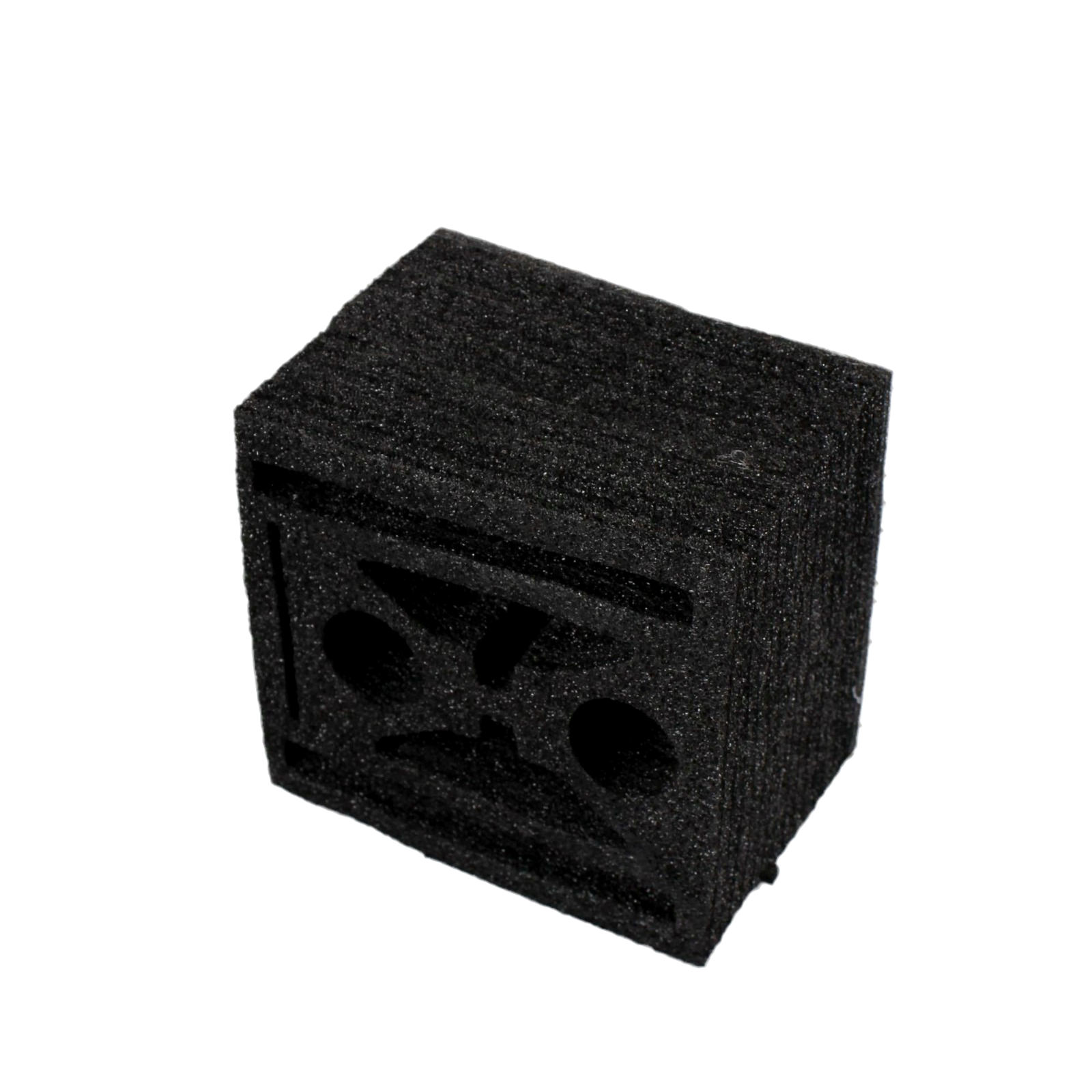
Automation hardware combines rigid housings with vulnerable terminals, cooling fins, screens, knobs and mounting clips. A module may survive a simple vertical load but fail when a parcel is dropped on an edge or when several units move inside a carton. An engineered insert supports the durable parts of the housing while leaving clearance around connectors and controls. Buyers can compare this approach with the broader EPE packaging guide for electrical components.
Products commonly packed in custom EPE foam
Typical projects include PLC modules, servo drives, industrial sensors, encoders, safety relays, power supplies, HMI panels, gateways, I/O units and calibration accessories. The insert may hold one high-value device, a matched kit or multiple identical parts for line-side delivery. For mixed kits, a cavity map and part-number list are more reliable than a general statement such as “foam for electronics.”
Start with product geometry and protected zones
Send a dimensioned drawing or 3D file that shows the maximum envelope, connector projections, heat sinks, clips and mounting ears. Identify the surfaces that may carry load and those that must remain free. If the product has a removable terminal block or cable set, state whether it ships installed or in a separate cavity. The dimensional questions in the EPE insert dimension guide are useful before requesting a quotation.
Choose the EPE foam construction around the load
EPE is available in different grades, thicknesses and layer constructions. A light sensor may use a compact die-cut tray, while a heavier drive may need a laminated base with wider support areas. The factory should state the proposed foam grade or density range, total thickness, number of bonded layers and critical wall dimensions. Buyers should avoid selecting foam from color alone because two visually similar materials can behave differently under compression.
Protect connectors, displays and heat sinks
Connector pins should not carry the weight of the product. Display windows and control knobs also need clearance so that the foam does not create rub marks. Deep cooling fins can concentrate stress if the insert contacts only the outer edges. A practical design supports the main housing, adds finger access for removal and uses separate accessory cavities where cables or brackets could scratch the device.
Plan for antistatic and cleanliness requirements
Some automation components require antistatic packaging, while others can use standard EPE. Buyers should provide the internal handling specification rather than assuming that a foam color proves a particular electrical property. Ask how material identification, batch control and cleanliness will be documented. If the device is bagged before loading, include the bag thickness in the fit review because it changes cavity clearance and surface friction.
Design the complete carton or tote system
The insert must work with the outer container. State the usable internal dimensions, loading direction, number of units per pack, stacking plan and pallet footprint. For returnable totes, define the tote model, lid clearance and expected handling cycle. For export cartons, check board strength, top pads and void control together with the foam. The machinery export packaging specification guide explains how these elements interact.
Define sampling and fit approval
A first sample should be evaluated with the real product, accessories, bag and final outer carton. Check insertion force, removal access, connector clearance, orientation and movement when the pack is tilted. Record any changes against a drawing revision. A signed sample or approved measurement report gives the factory a clear master for repeat orders and helps prevent undocumented cavity changes.
Build a repeat-order quality plan
For recurring OEM demand, agree on incoming material checks, first-piece approval, in-process measurements and final sampling. Critical dimensions normally include cavity length, width and depth, minimum wall thickness, total insert size and alignment between bonded layers. Surface condition, color and bonding quality may also matter. European buyers can use the EPE foam QC plan for importers as a starting checklist.
Match testing to the real distribution route
Testing should represent the packed system and the actual route. Parcel distribution may justify drop and vibration checks, while palletized sea freight may place more emphasis on compression, stacking stability and moisture management. High-value automation modules may also need a visual inspection and functional check after testing. The buyer should define the acceptance criteria before the sample is tested, not after damage is found.
Review European packaging and PPWR questions
European customers increasingly request information about packaging weight, material identification and end-of-life handling. EPE is a polyethylene foam, but the complete pack may also contain cartons, films, labels and adhesives. Keep the material list and pack weight available, avoid unnecessary components and confirm the buyer’s current PPWR responsibilities with its compliance team. Packaging design support is not a substitute for a legal assessment.
Prepare a quotation package for the factory
Send drawings, photos, product weight, protected zones, carton or tote dimensions, annual forecast, sample quantity, destination and required tests. Ask the supplier to separate engineering or tooling charges from unit pricing and to state the quotation basis, sample timing, production timing and trade terms. The European buyer RFQ guide, custom EPE foam cost guide and lead-time guide can help procurement teams compare offers.
For a project review, send Hongying the component drawing, accessory list, packaging target and annual volume through the custom EPE foam quotation form. The factory can review cavity layout, sample information and bulk-order requirements for industrial automation packaging.
Frequently Asked Questions
Can EPE foam hold several PLC or relay models in one tray?
Yes, when the models share suitable support points. Modular plugs or clearly separated cavities can cover a product family, but the design must prevent a smaller model from moving in a larger cavity.
Does every automation component need antistatic foam?
No. The requirement depends on the device and the buyer’s handling specification. State the electrical packaging requirement explicitly and verify the material documentation during approval.
How much clearance should be left around connectors?
There is no universal value. Clearance depends on connector projection, product mass, foam response and expected movement. The sample should confirm that no connector carries the load.
Can the insert be used in a KLT or reusable tote?
Yes. Provide the exact tote model and internal dimensions, including lid and stacking clearance. Returnable systems also need an agreed cleaning and replacement approach.
What files are best for a custom insert quotation?
A dimensioned PDF plus STEP or another usable 3D format is ideal. Include photos, weight, accessories, outer-container information and protected surfaces.
Should the sample be tested with the final carton?
Yes. Foam, carton, pads, bags and loading pattern work as one system. Testing an insert alone does not represent the final pack.
Can the factory supply replacement inserts for service programs?
Yes. Agree on the drawing revision, identification method, packaging quantity and reorder forecast so replacement inserts remain consistent with the approved design.
What should buyers compare besides unit price?
Compare sample quality, fit repeatability, material specification, inspection plan, packing labor, freight volume, lead time and the supplier’s control of future revisions.