Custom EPE foam trays for bearings, gears and transmission parts should prevent metal-to-metal contact, support dense loads and work with the customer-approved corrosion-control system. A reliable RFQ includes part drawings, maximum weight, coated or ground surfaces, oil or VCI method, units per tray, lifting method, carton or tote dimensions and annual demand. The goal is repeatable handling, not merely filling empty carton space.
Why dense transmission parts need separated cavities
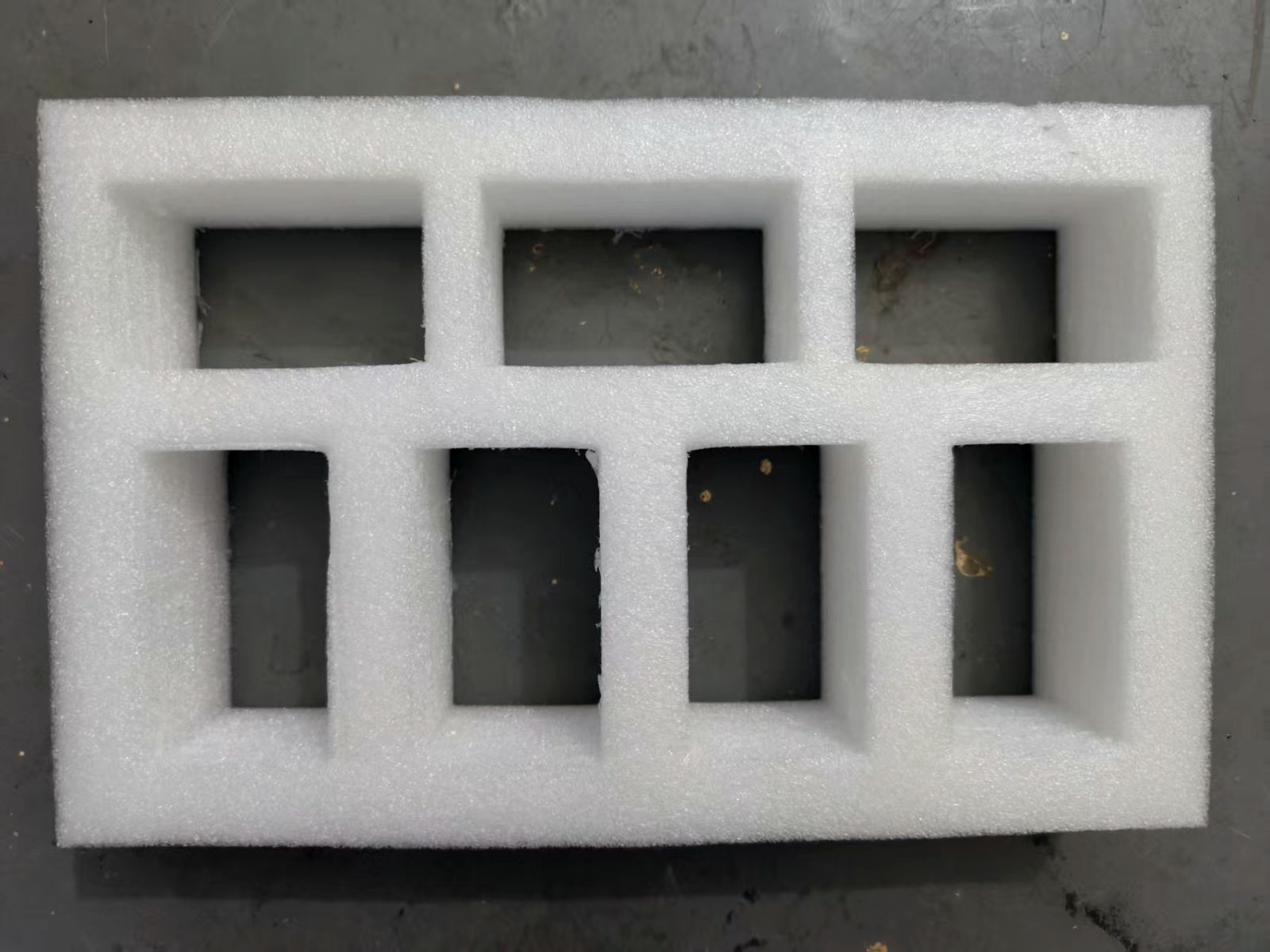
Bearings and gears concentrate substantial weight into small areas. If parts move, teeth, races, seals and finished bores can strike adjacent components. Narrow foam walls can also tear under repeated handling. A tray must distribute load across a stable base, maintain separation and remain stiff enough for operators to lift the intended quantity safely.
Classify surfaces and rejection risks
Mark bearing races, gear teeth, splines, sealing diameters, threads and coated faces. State which surfaces may contact packaging and which require a bag, cap or interleaf. Include receiving-inspection criteria such as no dents, no visible rub marks and intact preservation. This risk map determines supports more accurately than selecting foam only from product weight.
Calculate a practical units-per-tray layout
More cavities reduce packaging cost per part but increase tray weight and can leave thin walls. Balance operator lifting limits, carton size, pallet efficiency and safe separation. Provide the packing-line direction and whether trays are manually or robotically loaded. Orientation features can help prevent a gear or bearing from being installed upside down.
Support the strongest geometry
A bearing may be supported around an approved outer ring, while a gear may need a broad face support that keeps teeth free. Shafts and hubs require stable locations that prevent tipping. Use finger notches or lifting aids without cutting away critical load walls. The real support plan should be shown on an approved section drawing.
Integrate corrosion prevention correctly
EPE is cushioning, not a complete corrosion-control method. If the product requires VCI film, oiled paper, sealed bags or desiccant, the buyer must specify and approve that system. Confirm compatibility with oils and coatings. Include all preservation materials in fit testing because folds and seals change cavity dimensions and part movement.
Choose foam grade and wall dimensions
Dense components may need a firmer grade, thicker base or wider walls than light consumer products. Ask the supplier to state foam grade or density range, total thickness, layer construction and bonding method. Validate compression under the full stack. A visually thick tray can still fail if the load is concentrated on a small unsupported area.
Control cavities with maximum part dimensions
Use maximum outside diameters, widths, hubs and bagged envelopes. Define cavity depth, pitch, wall thickness and total tray dimensions using the EPE foam insert dimension guide. Sample both minimum and maximum part conditions when tolerances affect retention. Record revision changes before the next bulk run.
Design stacking and tote interfaces
Stacked trays should transfer weight through perimeter and structural walls rather than through the parts below. State tote model, usable internal dimensions, lid clearance and stack count. For cartons, review gross weight, board strength and pallet pattern. Add a rigid divider or alternative tray construction if EPE alone cannot provide the required lifting stiffness.
Test with the heaviest production parts
A sample filled with lightweight substitutes cannot demonstrate base compression or wall durability. Use heaviest representative parts and the final preservation materials. Evaluate lifting, tilting, vibration, drops where relevant, compression and surface condition. Acceptance should cover both product damage and tray integrity after the intended handling cycle.
Inspect repeat-production critical features
Check cavity pitch, depth, diameter or profile, base thickness, walls, layer alignment, bonding, surface cleanliness and count per pack. Compare the first piece with the approved sample. The EPE packaging QC checklist helps procurement teams define records for ongoing bearing and gear programs.
Reduce logistics cost without overloading trays
Optimize part orientation and pallet utilization, but respect operator lift limits and carton strength. A smaller footprint is not useful if dense trays become unsafe or damage lower layers. Record packaging weight and material types for European customers, and let the responsible importer determine applicable PPWR reporting or compliance obligations.
Prepare a transmission-parts RFQ
Provide drawings, weights, surface restrictions, preservation method, units per tray, carton or tote data, stack height, forecast, destination and tests. Ask suppliers to state the price basis and sample plan. Review the custom EPE packaging cost factors before comparing quotations.
Send Hongying your bearing or gear drawing, loaded tray target and corrosion-control method through the custom EPE foam quotation form.
Frequently Asked Questions
Can EPE foam contact oiled bearings?
Compatibility depends on the oil, contact time and customer specification; use approved bags or interleaves when required.
How many gears should fit in one tray?
The answer depends on part weight, safe lifting, wall thickness, carton strength and pallet efficiency.
Can trays be stacked directly?
Yes only when structural walls transfer load safely and the stack is validated with fully loaded trays.
Does EPE prevent corrosion by itself?
No. Corrosion control requires a buyer-approved system such as suitable bags, VCI materials or desiccant.
How are gear teeth protected?
Keep teeth from carrying load or contacting neighboring parts, with adequate clearance and controlled orientation.
Should samples use real production parts?
Yes, especially the heaviest and dimensionally extreme parts with final preservation materials.
Can trays fit automated loading?
Potentially. Provide robot gripper, datum, pitch and tray-stiffness requirements during design.
What should repeat-order inspection cover?
Check material, cavity geometry, pitch, base and wall thickness, bonding, cleanliness and loaded quantity.