EPE foam packaging for CNC machined parts should stop metal-to-metal contact, support the strongest surfaces and protect edges, threads and cosmetic finishes throughout export transport. A reliable quotation starts with part drawings, individual weight, surface-finish requirements, corrosion-control method, units per pack, carton dimensions and the expected shipping route. These details allow an EPE foam insert manufacturer to design a repeatable pack instead of guessing from a product photograph.
Why CNC machined parts are difficult to package
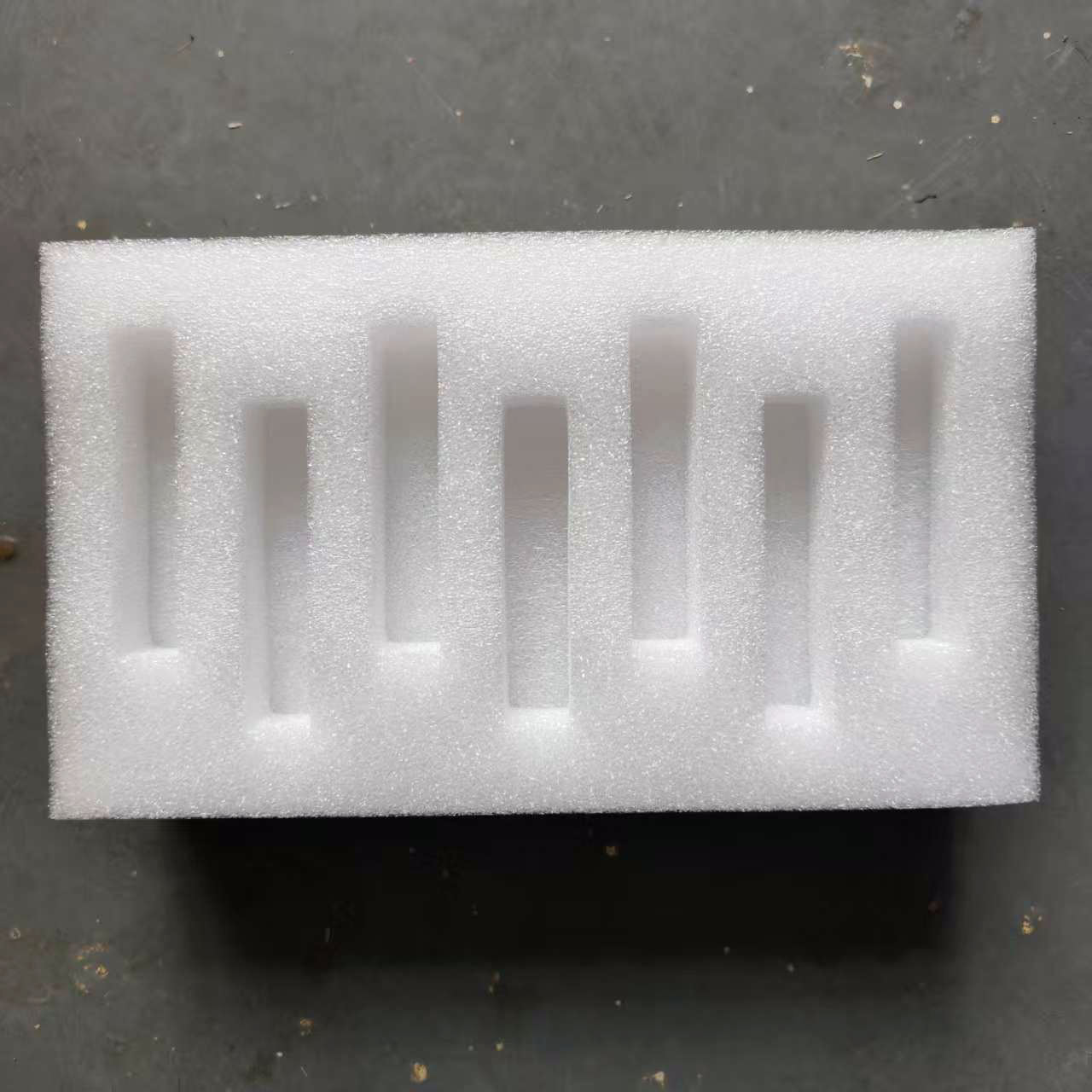
Precision metal components are often dense, irregular and expensive relative to their size. A small amount of movement can cause scratches, edge dents, thread damage or contact marks that make an otherwise functional part unacceptable. Multiple parts in one carton also create concentrated loads. EPE foam packaging must therefore manage both impact energy and part separation. Buyers shipping larger assemblies can compare these principles with our machinery export packaging specification guide.
Identify the actual damage risks before design
List what causes rejection at incoming inspection. Common risks include chipped corners, rubbed anodizing, damaged sealing faces, deformed pins, contaminated bores and dents on turned surfaces. A heavy component may also cut through a narrow foam wall during repeated handling. The packaging drawing should mark no-contact zones, acceptable support zones and the required separation between adjacent products. This protects quality more effectively than asking only for a thicker sheet.
Parts commonly packed in custom EPE foam
Suitable projects include milled housings, turned shafts, aluminum blocks, stainless-steel fittings, valve bodies, brackets, gears, tooling components, inspection fixtures and assembled precision modules. Trays may hold one heavy item or a grid of smaller parts for production-line delivery. For product families, interchangeable plugs or clearly identified tray variants can reduce confusion, but every configuration needs its own approved cavity map and loading instruction.
Choose safe load-bearing surfaces
The insert should carry weight on robust faces rather than on threads, sharp lips, thin flanges or finished optical surfaces. Large flat support areas distribute compression and help the pack remain stable when cartons are stacked. Finger notches must allow operators to remove the part without pulling on vulnerable features. If the component can be loaded in two orientations, use asymmetric geometry or clear identification so the wrong orientation is physically difficult.
Specify cavity clearance and critical dimensions
A cavity that is too loose permits impact; one that is too tight increases packing labor and may mark a finish. Clearance depends on mass, geometry, protective bags and foam response, so there is no universal allowance. Provide maximum product dimensions and tolerances, not only nominal CAD data. The factory should state cavity length, width and depth, total insert size, minimum wall thickness and datum points. Our EPE foam insert dimension guide provides an RFQ checklist.
Build the correct layered foam construction
Many CNC packaging projects use a laminated EPE base, a die-cut or fabricated cavity layer and a top pad. Heavy parts may require a wider base or several support zones, while long shafts need support at locations that control bending and movement. The quotation should identify the proposed foam grade, overall thickness, layer construction, bonding method and critical walls. Foam color alone does not define performance, and excessive softness can allow dense parts to bottom out.
Control scratches, residues and corrosion interfaces
EPE foam is only one part of the protection system. Cosmetic components may need a clean polyethylene bag, interleaf or approved film between the surface and foam. Corrosion-sensitive metals may require VCI materials, desiccant or another customer-approved method, especially for sea freight. Confirm material compatibility before production and avoid unapproved oils or cleaners. The buyer should state cleanliness limits and whether packaging materials may touch sealing faces, threads or machined bores.
Design the carton, tote and pallet as one system
Provide the usable internal carton or tote size, number of trays, maximum gross weight and loading direction. Trays should not bow when lifted, and stacked layers must transfer load without pressing on the parts below. For returnable systems, define tote model, lid clearance, cleaning method and expected cycle count. For export cartons, review board strength, top pads, void control and pallet pattern together. A correct insert in a weak outer carton is not a complete shipping solution.
Approve samples with production-representative parts
Test a first article using parts that represent maximum dimensions and weight. Include the final bag, protective film, labels, carton and loading quantity. Check insertion force, removal access, movement when tilted, contact on protected zones and tray stability when stacked. Record changes against a revision-controlled drawing. A signed sample or measurement report becomes the reference for repeat production and prevents informal cavity changes.
Set measurable quality controls for repeat orders
Recurring B2B programs need material identification, first-piece approval, in-process dimensional checks and final sampling. Inspect cavity size and depth, overall dimensions, wall thickness, layer alignment, bonding, surface condition and packed quantity. Define tolerances only where they affect fit or performance. European procurement teams can adapt our EPE foam packaging QC plan when preparing a supplier agreement.
Match transport tests to component weight and route
The full pack should be evaluated for its real distribution environment. Parcel networks may require drop and vibration checks; palletized sea freight may emphasize compression, stacking and moisture exposure. Dense metal parts can shift energy into small support areas, so inspect both the component and the foam after testing. Agree on acceptance criteria in advance, including allowable movement, cosmetic condition, functional inspection and carton damage.
Reduce packaging material for European programs
European buyers increasingly request packaging weight, material identification and evidence that unnecessary material has been avoided. A well-designed cavity layout can improve tray utilization and reduce carton volume without sacrificing protection. Keep a bill of packaging materials for EPE, cartons, bags, labels and any corrosion-control items. PPWR obligations depend on the supply chain and market role, so each importer should confirm current requirements with its compliance adviser rather than treating a supplier statement as legal advice.
Send a complete RFQ to compare suppliers
Include 2D or 3D files, part weight, annual volume, order quantity, protected surfaces, finish standard, corrosion method, outer-pack dimensions, destination and required tests. Ask suppliers to separate development or tooling costs from unit price and state the quotation basis. The custom EPE foam packaging cost guide, sample-to-production lead-time guide and European buyer RFQ guide help purchasing teams compare quotations on the same basis.
For a project review, send Hongying your drawing, part weight, finish requirements, carton or tote information and annual forecast through the custom EPE foam quotation form. Our factory can review cavity layout, samples and repeat-order controls for CNC machined parts and precision components.
Frequently Asked Questions
Can one EPE foam tray hold different machined parts?
Yes. A mixed tray can work when each cavity has a clear part location and sufficient separation. Provide a cavity map, part numbers and maximum dimensions for every item.
Will EPE foam scratch anodized aluminum?
Suitability depends on finish sensitivity, cleanliness and movement. A clean bag or approved interleaf may be added, and the complete pack should be tested with production-representative parts.
How should threads and sealing faces be protected?
Keep them away from load-bearing contact and leave controlled clearance. Caps, bags or separate protective elements may be required when the customer specification calls for them.
Can EPE packaging be used with VCI materials?
Often yes, but the buyer should define the corrosion-control system and confirm compatibility, sealing method and effective exposure period with the relevant material supplier.
What information is required for a quotation?
Send drawings, tolerances, weight, finish risks, quantity, annual forecast, carton or tote size, destination, corrosion requirements and the desired validation tests.
Should the foam be tested with maximum-weight parts?
Yes. Maximum weight and dimensional extremes can reveal compression, fit and handling problems that an average sample may not show.
Can trays be supplied for reusable factory totes?
Yes. Specify the exact tote, usable internal dimensions, stacking arrangement, cleaning process and expected handling cycles before design approval.
What should buyers inspect on repeat orders?
Check material identification, critical dimensions, wall thickness, layer alignment, bonding, surface cleanliness, packing quantity and conformity to the approved sample or drawing revision.