EPE foam packaging for HVAC and refrigeration components should support strong housings, isolate tubes and connectors, and keep installation kits organized from factory to job site. OEM buyers should send drawings, weight, protruding features, cleanliness or corrosion requirements, pack quantity, carton size and transport route. The insert design can then balance impact protection, packing labor and freight volume.
Why HVAC components fail in generic packaging
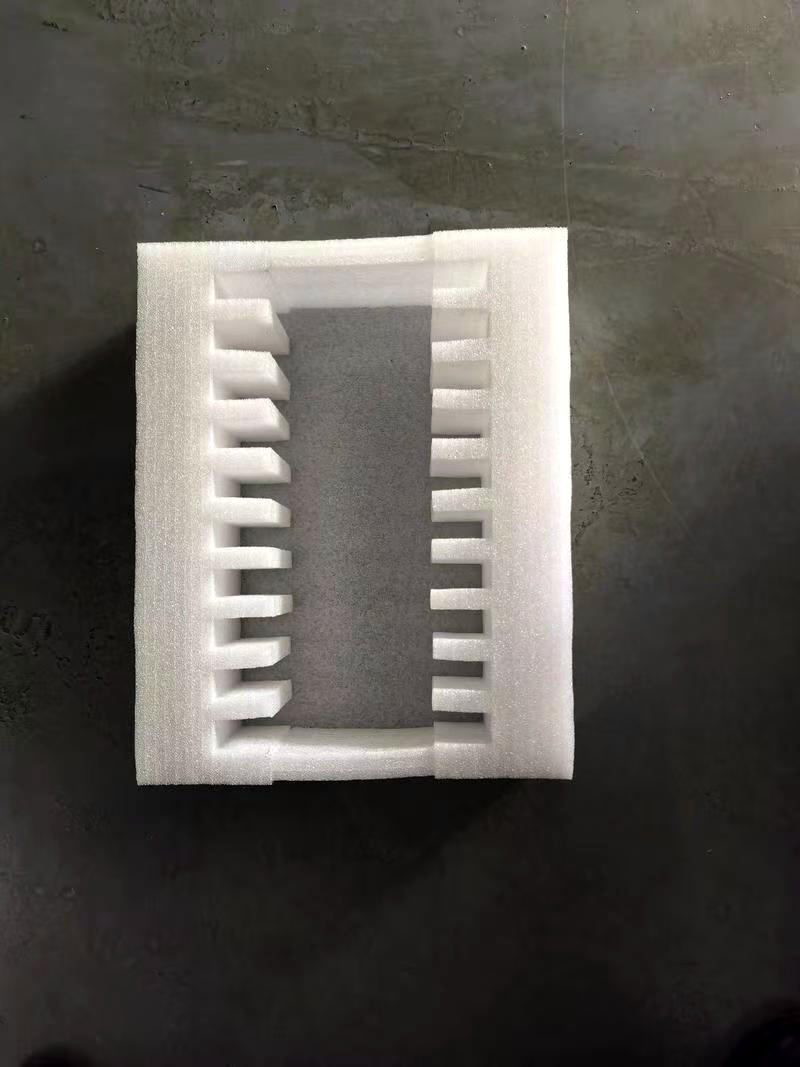
Controllers, valves, sensors, fan modules and refrigeration service parts often have strong bodies but vulnerable tubes, terminals, brackets and adjustment stems. Loose void fill allows the heavy body to move and transfer force to these projections. A custom cavity supports approved structural areas and prevents one component from contacting another during drops, vibration and repeated job-site handling.
List every component in the shipping kit
A pack may include a control unit, sensor probe, wiring harness, mounting plate, screws and instructions. Provide a bill of contents and state whether accessories ship attached or separately. Dedicated cavities make shortages visible and keep metal brackets away from finished surfaces. If regional kits differ, use a cavity map for each sales configuration.
Protect tubes, capillaries and threaded ports
Mark copper tubes, capillary lines, flare fittings, threaded ports and valve stems as restricted zones. The foam should carry load through the main housing, not through a tube bend or connector. Include shipping caps and bagged assemblies during fit approval. Adequate finger access prevents installers from using a fragile projection as a handle.
Select supports for uneven and heavy shapes
A dense motor or valve body needs broad support zones and sufficient foam beneath the load. An irregular controller may require laminated layers that locate the housing without pressing on its display. Ask the supplier to state foam grade, total thickness, layer construction, bonding method and critical wall dimensions instead of specifying thickness alone.
Manage oil, cleanliness and material compatibility
Some refrigeration components carry process oils or have capped fluid passages. State whether the insert may contact the component directly and whether a sealed bag is required. Packaging should not introduce loose particles into open ports. Buyers must approve any corrosion-control or cleanliness method and include its material thickness in cavity-fit testing.
Control tolerances across supplier part variation
Castings, molded housings and bent brackets can vary more than nominal CAD geometry suggests. Provide maximum dimensions and known variation at support points. The EPE insert dimension guide helps teams define cavity datums, clearance, total insert size and carton fit. Samples should cover dimensional extremes where possible.
Coordinate the insert with long export cartons
Some HVAC assemblies use long or tall cartons that can buckle or flex on a pallet. State carton board strength, orientation, gross weight and pallet support. End supports, side rails and top pads must work together. Avoid gaps that permit the insert to migrate, and confirm that closing the carton does not load a fragile tube or terminal.
Test the complete pack for the real route
Parcel service parts may need drop and vibration checks, while palletized OEM shipments may emphasize compression and stacking stability. Test with final products, bags, caps, accessories and cartons. Define acceptable movement, cosmetic condition, port condition and functional checks before the test so approval is objective.
Document sampling and engineering changes
Record the approved cavity drawing, product revision and outer-pack specification. When a bracket, connector or sensor cable changes, review the packaging before the next bulk order. A signed sample or dimensional report provides a repeatable master and prevents undocumented trimming on the packing line.
Inspect repeat orders using critical dimensions
Incoming material identification, first-piece checks and final sampling should cover cavity size, support position, wall thickness, total dimensions, bonding and surface condition. Use the European EPE packaging QC checklist as a starting point, then add the component-specific tube and connector clearances that determine performance.
Reduce pack volume without increasing damage risk
Efficient cavity nesting and sensible units per carton can reduce freight and packaging weight. Do not remove load-bearing walls simply to hit a material target. Maintain a bill of materials and recorded pack weight for European customers. PPWR decisions should be confirmed by the responsible importer and compliance team for the destination market.
Prepare an HVAC packaging RFQ
Send drawings, weights, vulnerable features, kit contents, bagging requirements, carton data, forecast, destination and requested testing. Separate development charges from unit price and ask for the quotation assumptions. The sample and bulk lead-time guide and cost-factor guide help OEM teams plan sourcing.
For a packaging review, send Hongying the HVAC component drawing, protected zones, carton target and annual demand through the EPE foam RFQ form.
Frequently Asked Questions
Can EPE foam protect copper tubes?
Yes, when tubes remain outside load paths and the housing is supported at stronger locations with verified clearance.
Can valves and controllers share one tray?
Yes, if separate cavities prevent the dense valve body and accessories from striking the controller.
Should capped ports be included in the drawing?
Yes. Caps change the product envelope and must be present during fit and transport testing.
Is a bag required around refrigeration parts?
That depends on cleanliness, oil and corrosion requirements specified by the product owner.
Can the insert fit a reusable service tote?
Yes. Provide the exact tote dimensions, lid clearance, loading direction and expected handling cycle.
How is a long carton validated?
Test the full pack with the intended pallet support, stacking arrangement and distribution route.
What dimensions are normally inspected?
Cavity size, support location, tube clearance, wall thickness, total insert size and layer alignment are typical controls.
What is needed for a fast RFQ?
Send drawings, weight, kit contents, protected zones, carton dimensions, quantity, destination and required tests.