EPE foam packaging for industrial motors, actuators and gear drives should carry weight through strong housings while protecting shafts, encoders, cables, connectors and mounting features. Buyers need to provide drawings, center of gravity, maximum mass, prohibited contact areas, preservation method, accessory list, outer-pack size and shipping route. These details determine whether a laminated insert, end supports or a combined material system is appropriate.
Why compact drive components create high point loads
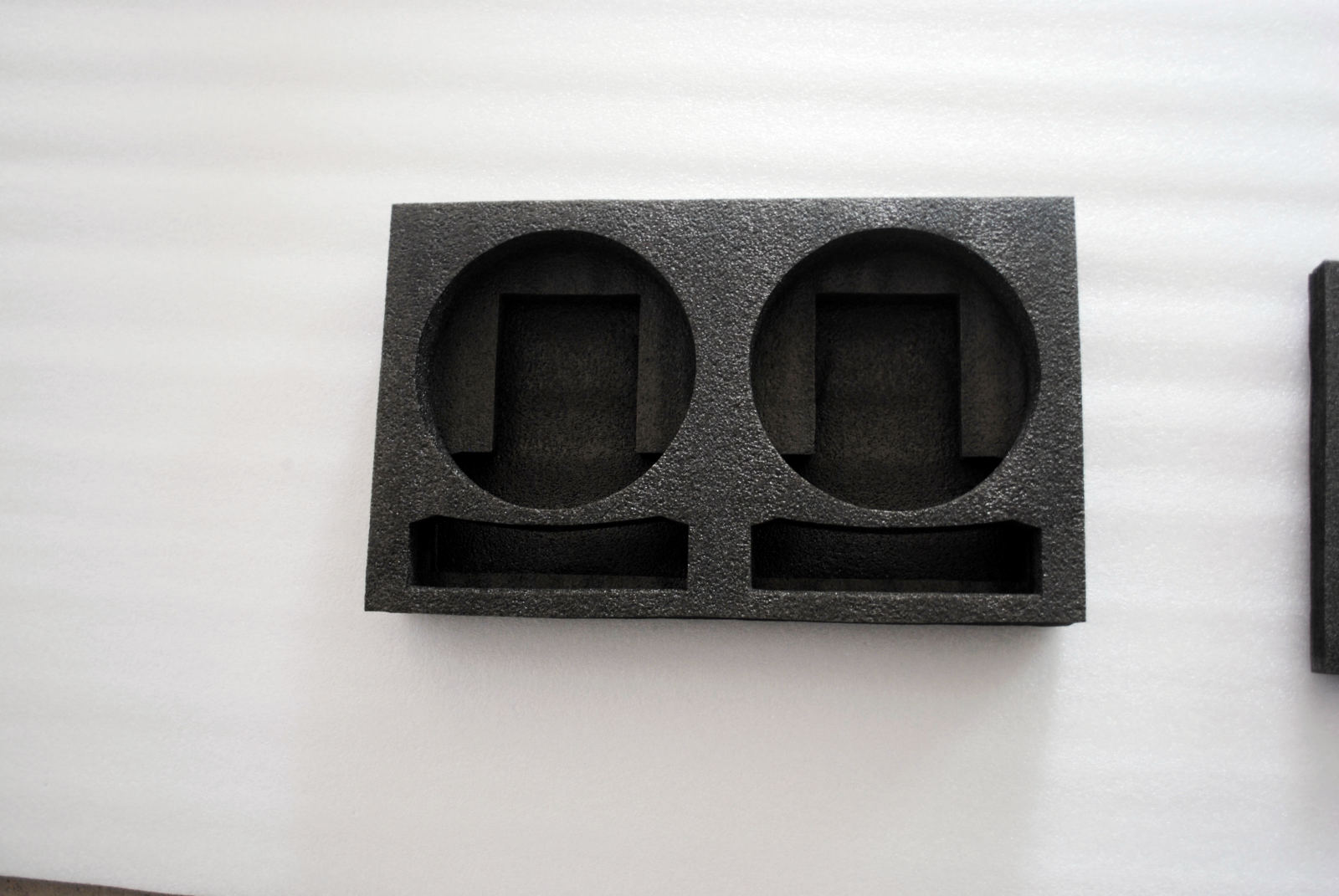
Motors and actuators can be small but dense. A narrow foam base may compress until the product bottoms out, and a shifted unit can load the output shaft or encoder cover. The insert should spread mass across stable housing areas, resist tipping and keep adjacent products separated during repeated handling and export transport.
Identify shafts, encoders and cable exits
Mark output shafts, keyways, brake releases, encoder caps, terminal boxes and cable glands as protected zones. Required shaft caps must be fitted during sampling. Do not use a connector, cable or shaft as a lifting point. Finger access should let operators grasp the housing and remove it without disturbing fragile projections.
Define whether accessories ship installed
Mounting plates, couplings, keys, cables and fasteners can damage the main unit if they move inside an open compartment. State whether each accessory is installed, bagged or placed in a dedicated cavity. A cavity map reduces missing parts and prevents a metal coupling from striking a painted motor housing during vibration.
Support the center of gravity securely
Provide weight and center-of-gravity information for asymmetric gear drives and linear actuators. Supports should prevent rocking and spread pressure over robust casting areas. Long actuators may need several aligned supports. When the product orientation is critical, asymmetric cavity features help stop packing-line reversal.
Select foam grade and base thickness
The supplier should propose foam grade, total thickness, layer arrangement, bonding method and minimum load walls. A heavier motor may need a firmer or wider support than a sensor. Validate compression with the maximum production weight and full stack. Foam color or sheet thickness alone cannot demonstrate adequate protection.
Integrate bags and corrosion controls
Machined shafts and metal housings may require an approved bag, VCI material, protective cap or desiccant. EPE itself is not a corrosion-control system. State whether direct foam contact is permitted and include all preservation layers in the fit test. Confirm compatibility with oils, coatings and seals for the planned storage duration.
Set dimensions for casting and assembly variation
Use maximum housing, flange, connector and cap dimensions. Define cavity length, width, depth, support position and total insert size using the EPE insert dimension guide. Sample more than one production unit when casting or cable-routing variation could change fit.
Coordinate carton, crate or returnable tote
State usable internal dimensions, gross weight, loading direction, lifting method, stack count and pallet footprint. Foam should not migrate in the outer container, and top restraints must avoid encoder caps or terminal boxes. Very heavy assemblies may require corrugated structures, rigid bases or other materials working with EPE.
Validate with route-specific testing
Use the heaviest production-representative drive, final caps, bags, accessories and carton. Check movement, base compression, shaft clearance and removal. Parcel, pallet and sea routes impose different loads. Agree on cosmetic, dimensional and functional acceptance criteria before drop, vibration or compression testing begins.
Control repeat orders with measurable checks
Inspect foam identity, cavity dimensions, base and wall thickness, support alignment, bonding, surface condition and pack count. Keep the approved sample and drawing revision linked to the motor model. The EPE packaging QC checklist can be expanded with shaft-clearance and maximum-load checks.
Optimize pallet density safely
A compact layout can reduce freight, but excessive units per carton may exceed lifting limits or carton compression strength. Model total gross weight and pallet stability before approving the cavity pitch. Maintain packaging material and weight records for European customers, while the importer determines its current PPWR obligations.
Prepare a motors and actuators RFQ
Send drawings, weight, center of gravity, protected features, caps, preservation method, accessories, outer-pack details, forecast, destination and tests. Review the EPE packaging cost factors and request separately stated development charges and unit-pricing assumptions.
Send Hongying your motor, actuator or gear-drive drawing, packed weight and annual forecast through the custom EPE foam RFQ form.
Frequently Asked Questions
Can EPE support a heavy motor?
Potentially, when support area, foam grade, base thickness and the complete outer pack are engineered and validated.
How is an output shaft protected?
Keep it outside load paths, use required caps and verify clearance under drops, vibration and stacking.
Can couplings ship in the same carton?
Yes, but use a dedicated cavity so the coupling cannot contact the motor or actuator.
Does EPE prevent shaft corrosion?
No. Use the product owner’s approved corrosion-control method and include it in fit testing.
Should maximum-weight units be sampled?
Yes. Maximum weight reveals base compression and handling risks that lighter samples may hide.
Can inserts fit returnable totes?
Yes. Provide the exact tote, lid clearance, stack count, cleaning method and expected cycles.
What production dimensions matter most?
Cavity geometry, support positions, shaft clearance, base thickness, walls and total insert size are typical controls.
What information speeds up quotation?
Provide drawings, mass, center of gravity, protected zones, accessories, outer pack, forecast, route and tests.