EPE foam packaging for lighting fixtures, LED drivers and electrical accessories should prevent bending, surface abrasion and connector damage while keeping long or mixed components organized for export. Buyers receive a more accurate design when they provide product drawings, weight, optical and cosmetic no-contact zones, accessory lists, carton dimensions, shipping method and annual demand. A custom EPE foam insert can then be sampled and controlled as part of the complete pack.
Why lighting and electrical products need purpose-built packaging
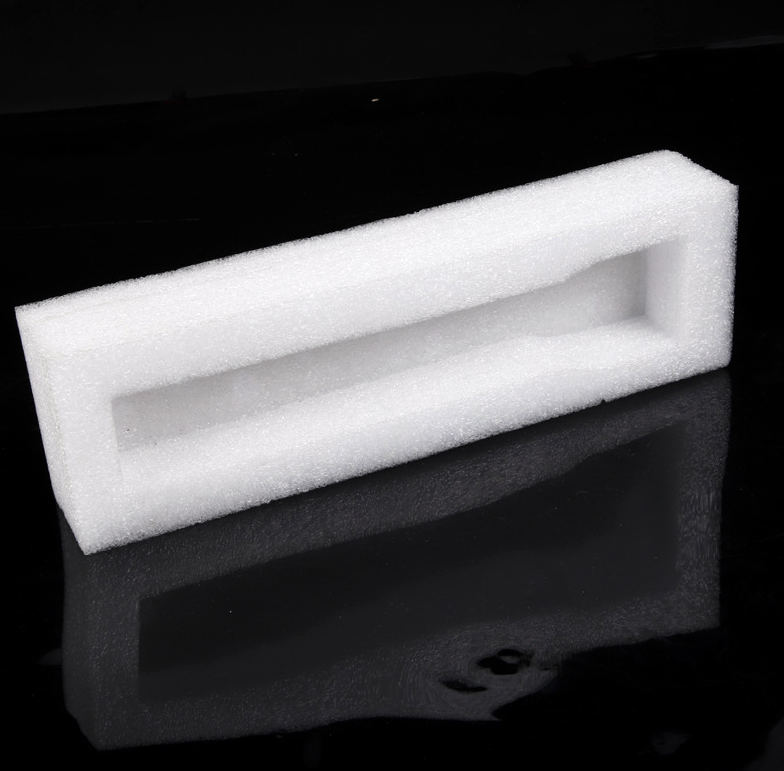
Lighting products combine long profiles, delicate lenses, painted surfaces, cables and electronic controls. A carton may look undamaged while parts inside rub, bow or strike each other. Generic void fill rarely controls the orientation of every component. Purpose-built EPE foam packaging uses defined supports and clearances to protect vulnerable zones. Buyers of control gear can also review our electrical component packaging guide.
Products suitable for custom EPE foam inserts
Common applications include linear LED fixtures, downlights, spotlights, drivers, control modules, power supplies, aluminum channels, diffusers, lenses, sensor housings, connectors and installation kits. The insert may hold one finished fixture, several identical components or a complete project kit. For mixed kits, identify every part number and quantity so the cavity layout supports packing accuracy as well as transport protection.
Map cosmetic, optical and electrical risk zones
Mark surfaces that must not touch foam, including clear lenses, polished reflectors, display windows, connector pins and painted faces with strict appearance standards. Identify safe support points on the housing or structural frame. Cable exits need room so they are not sharply bent or trapped beneath the product. If accessories can move into a finished surface, place them in separate cavities or an approved bagged compartment.
Support long fixtures without creating bending stress
Long lighting profiles usually need several aligned supports rather than pressure at only the ends. Support spacing depends on fixture stiffness, mass and carton orientation. The insert should restrict sideways travel while leaving controlled clearance around diffusers and decorative surfaces. A top pad or crosspiece may stabilize the product, but it must not push onto a fragile lens. Sampling with the full-length production product is essential because shortened prototypes do not represent bending behavior.
Specify cavity fit and operator access
A secure cavity does not need excessive compression. Too much interference can mark a coating, slow the packing line or make removal unsafe. Provide maximum dimensions, tolerances, cables and protective bags in the design data. Finger notches should allow an operator to lift the product by a robust area. For a structured RFQ, use the dimensional fields in our custom EPE insert dimension guide.
Select foam grade, thickness and construction
Light accessories may use a simple die-cut pad, while a heavy driver or long fixture may require a laminated base, cavity layer and top restraint. The factory should state the proposed EPE grade or density range, overall thickness, layer arrangement, bonding method and minimum walls. Wider supports distribute load and help prevent bottoming. Material selection should follow the packed weight and required performance rather than foam color or a generic thickness request.
Plan antistatic and cleanliness controls where required
Not every lighting product needs antistatic packaging, but exposed electronic assemblies or sensitive controls may have a defined ESD requirement. Buyers should state that requirement and request appropriate material documentation instead of relying on color as proof. Cleanliness also matters around optical parts. Define whether the product is bagged, whether loose particles are restricted and how inserts should be stored and packed before shipment.
Organize drivers, cables and installation accessories
A complete lighting kit may include a fixture, driver, cable, brackets, screws and instructions. Separate cavities reduce scratches and make missing items visible during final inspection. Heavy drivers should not be positioned where they can strike a lens during a drop. Cable cavities need adequate radius and volume without forcing plugs into the product. A printed or photographed loading standard helps operators pack every kit consistently.
Engineer the outer carton and pallet together
State the carton’s usable internal size, board specification, loading direction, gross weight and pallet pattern. Long cartons may bend between pallet supports, so pallet footprint and stacking arrangement matter. Inserts should fit without side gaps that permit migration, but they should not distort from an undersized carton. Buyers shipping machinery-related electrical items can use the export packaging specification guide to coordinate foam, carton and pallet decisions.
Validate samples against the real distribution route
Approve the insert with production-representative products, final bags, accessories and cartons. Check loading time, removal access, cable position, surface contact and internal movement. Testing should reflect parcel, pallet, air or sea transport as applicable. Define acceptance criteria before testing, including cosmetic condition, electrical or functional checks, allowable carton damage and whether the insert can be reused after the event.
Control quality across repeat B2B orders
Repeat orders require a drawing revision, approved sample and measurable inspection plan. Critical checks may include cavity dimensions, support alignment, total insert size, minimum wall thickness, layer bonding, surface condition and packed quantity. For long inserts, straightness and position of multiple supports can be important. European importers may adapt our EPE packaging QC checklist for supplier audits and shipment records.
Prepare packaging data for European customers
European customers may ask for component weights, material identification and steps taken to reduce unnecessary packaging. Optimize the cavity layout and carton size before simply reducing foam walls. Maintain a bill of materials covering EPE, cartons, bags, labels and tapes, and keep revision records when the pack changes. PPWR responsibilities vary by business role and destination; importers should confirm current legal duties with qualified compliance advisers.
Build an RFQ that produces comparable quotations
Send product drawings, weights, finish standards, protected zones, accessory lists, carton size, units per pack, forecast, destination and testing requirements. Ask for sample timing, production timing, unit-price basis and separately stated development costs. Our EPE packaging cost guide, lead-time guide and European buyer RFQ guide help procurement teams compare offers using the same scope.
Send Hongying your lighting or electrical product drawings, accessory list, outer-carton target and annual volume through the custom EPE foam quotation form. Our factory can review a cavity concept, sample requirements and repeat-order quality controls for export programs.
Frequently Asked Questions
Can EPE foam protect long linear LED fixtures?
Yes. The design normally uses multiple aligned supports and controlled side clearance. Support positions must be evaluated with the full-length product and final carton.
Should a clear diffuser touch the foam?
Usually the design should support stronger housing areas and leave optical surfaces clear. The final decision depends on the finish standard and approved contact materials.
Can LED drivers and fixtures share one insert?
Yes, when separate cavities prevent the heavier driver, plugs and cables from striking or rubbing the fixture during handling and transport.
Is antistatic EPE required for every driver?
No. Follow the product owner’s ESD specification. If antistatic performance is required, define it explicitly and verify the associated material documentation.
How are cables protected from sharp bends?
Provide a cavity with adequate volume and bend radius, keep plugs away from load paths, and document the approved cable position in the packing instruction.
What should be supplied for a custom quotation?
Provide drawings, maximum dimensions, weight, protected surfaces, kit contents, carton information, order quantity, forecast, destination and desired tests.
Can one design cover several fixture lengths?
Sometimes modular end supports or inserts can cover a product family. Each length still needs a confirmed support arrangement, carton fit and approval record.
What is checked during repeat production?
Typical controls include material identification, cavity and overall dimensions, support alignment, wall thickness, bonding, cleanliness, packed quantity and conformity to the approved revision.