Custom EPE foam packaging should be validated as a complete pack against the product’s damage modes and the real distribution route before mass production is released. A useful export test plan freezes the product, foam insert, bags, carton, closures and pallet configuration; selects route-appropriate inputs; defines pass/fail criteria before testing; and records what must be retested after a change. No foam thickness or one successful drop can guarantee damage-free delivery on every route. The approved evidence must remain linked to the exact production revision.
| Question | Evidence needed before release |
|---|---|
| What can fail? | Documented cosmetic, functional and dimensional damage modes |
| What route is represented? | Handling, parcel or pallet, vehicle, climate and stack assumptions |
| What exactly was tested? | Traceable product and complete packaging revisions |
| What counts as a pass? | Pre-approved inspection and functional acceptance criteria |
| When is evidence obsolete? | Defined product, packaging, supplier and route retest triggers |
Six-step release path: first, document the damage modes and route assumptions. Second, freeze a numbered pack configuration. Third, ask the responsible engineer or laboratory to choose a suitable current protocol. Fourth, test representative products in production-like packaging. Fifth, inspect against criteria approved before the test and record every result. Sixth, convert the approved design into drawings, work instructions and bulk inspection checks. Each step should have an owner and a dated record.
Keep development trials separate from formal release evidence. A designer may compare cavities or foam constructions with focused bench checks, but the final decision should identify exactly what was tested and what remains untested. When a trial fails, record the observed failure mode, design change and new revision before retesting. That history is valuable during later cost-down projects because it shows which walls, clearances, pads or carton features were introduced to control a specific risk. Purchasing should also confirm that the bulk supplier, material and converting process match the approved sample instead of treating the laboratory result as independent of production control.
Start with product damage modes and distribution hazards
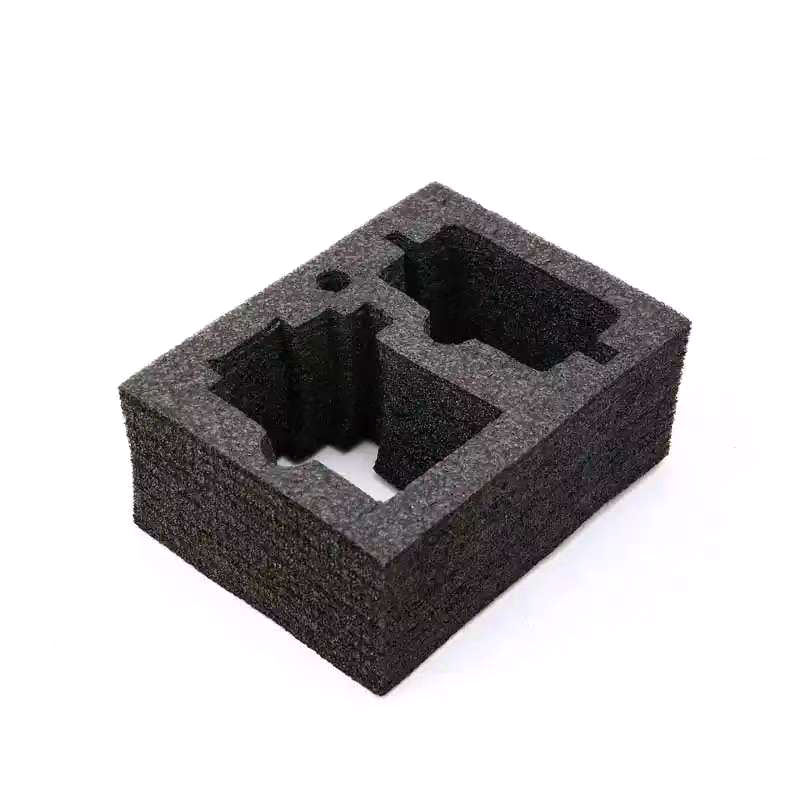
List how the product can be damaged: cracked edges, scratched coatings, bent pins, shifted calibration, broken seals, loose fasteners or cosmetic marks. Then map hazards such as manual drops, repeated parcel handling, vehicle vibration, long stacking, humidity or temperature exposure. The test plan should connect each important failure mode to an inspection and a distribution risk. The export carton protection checklist provides a starting review.
Freeze the complete pack configuration before testing
Record product part number and revision, product mass, protective caps, bag, desiccant where specified, EPE grade, layer construction, cavity revision, top and bottom pads, carton specification, closure method, quantity per carton and pallet pattern. Testing an empty insert or an unfinished carton does not validate the shipping pack. Photograph the assembly sequence so the laboratory and production team load it the same way.
Choose a protocol for the actual distribution route
The buyer or qualified test specialist should select a current protocol and severity that represent the intended route, product value and handling method. Parcel networks, palletized road freight, air freight and ocean export do not create identical hazards. Avoid copying a test label from another project without checking its scope. Record the chosen edition, sequence, orientation and any justified deviations in the plan.
Set conditioning, drop, vibration and compression inputs
Define preconditioning, test environment, gross package weight, drop orientations, vibration input, duration and compression or stack assumptions as applicable. These values should come from the selected protocol and distribution knowledge, not from the foam supplier’s guess. Sequence matters because a pack can accumulate damage. If the project has unusual handling or storage, the responsible packaging engineer should decide how to represent it.
Define pass/fail criteria before the test
A carton that looks intact can contain a failed product, while a scuffed carton may still protect it. Establish acceptable limits for product function, calibration, leakage, dimensions, finish, chips, cracks, connector condition and packaging movement before testing. Identify who inspects and which tools or functional tests are used. Pre-approved criteria prevent the team from changing the definition of success after seeing the result.
Use representative products and production-like packaging
Use actual or technically representative products covering weight and dimension extremes. Prototype dummies are useful only when their mass distribution, stiffness and vulnerable features reasonably represent the product and the plan records the limitation. Packaging should use the intended material grade, construction and carton. The thickness and clearance guide helps explain why nominal foam thickness alone cannot establish protection.
Inspect during the sequence without hiding accumulated effects
The plan should state when intermediate inspection is allowed and what may be opened or repaired. Frequent unpacking can relieve compression, change product position or conceal cumulative damage. When inspection is necessary, document the condition, orientation and any intervention. At final inspection, compare the product with its pre-test baseline and check the foam for bottoming, tears, permanent shift, open bonds and lost clearance.
Record results in a traceable test report
A report should identify the test laboratory or responsible team, date, equipment, protocol, inputs, product samples, packaging revisions, photos, observations and pass/fail conclusion. Record anomalies instead of deleting an inconvenient run. Attach raw data where relevant and link corrective redesigns to new revision numbers. The result supports a defined configuration; it is not a blanket certification for every product or route.
Decide whether a pilot shipment adds useful evidence
A controlled pilot shipment can reveal packing-line errors, pallet instability or route effects not reproduced in a laboratory. It is additional evidence, not a substitute for a suitable test plan. Define the number of packs, route, carrier, monitoring, receiving inspection and acceptance before dispatch. A pilot that arrives safely once does not prove future shipments cannot be damaged.
Set retest triggers before mass production
Review validation after changes to product weight, geometry, surface finish, center of gravity, EPE grade, layer thickness, cavity, bonding, carton, pack quantity, pallet pattern, supplier process or distribution route. The buyer decides whether document review, focused testing or full retesting is appropriate. A change-control rule is especially important when a purchasing team seeks cost reduction after initial approval.
Convert validation results into bulk QC controls
Use the test configuration to define incoming and production controls: material identification, CTQ dimensions, minimum base and wall thickness, layer alignment, bond integrity, total size, pack-out orientation and carton specification. The European EPE packaging QC plan shows how to turn approval evidence into repeat-order checks. Maintain a matched drawing and sample; do not expect inspectors to recreate the test intent from memory.
Send a test-ready RFQ to the packaging factory
Provide product drawings, weights, known failures, permitted support zones, units per pack, complete outer packaging, route, forecast and buyer-defined validation requirements. Ask the quotation to separate development and sample work from bulk pricing. Review the samples, tooling and lead-time guide and high-volume tray guide before scheduling production. Hongying’s 3,000+ m² Shanghai facility can prepare EPE samples for buyer-controlled pack validation.
Next step: Send the product drawing, packed weight, carton data, route and test requirement through the custom EPE packaging inquiry form, or share the current damage problem on WhatsApp.
Frequently Asked Questions
Does one drop test validate an export package?
Not necessarily. Validation should represent relevant distribution hazards and use pre-defined product acceptance criteria.
Can the EPE insert be tested without the carton?
Material or component tests can support development, but transport validation should use the complete intended pack.
Who selects the test protocol?
The buyer, responsible packaging engineer or qualified laboratory should select a current route-appropriate protocol and severity.
Must every project use the same drop height?
No. Package weight, route, handling method and selected protocol affect the appropriate inputs.
Can a successful test guarantee zero shipping damage?
No. It provides evidence for a defined configuration and route assumptions, not a universal guarantee.
When should packaging be retested?
Review retesting after material, geometry, product, carton, pallet, supplier-process or distribution-route changes.
What should a validation report identify?
Record product and packaging revisions, protocol, inputs, equipment, observations, photos, inspection results and conclusion.
What does Hongying need to prepare a sample?
Provide drawings, weight, fragile zones, complete outer pack, order forecast, destination and the buyer-defined validation plan.