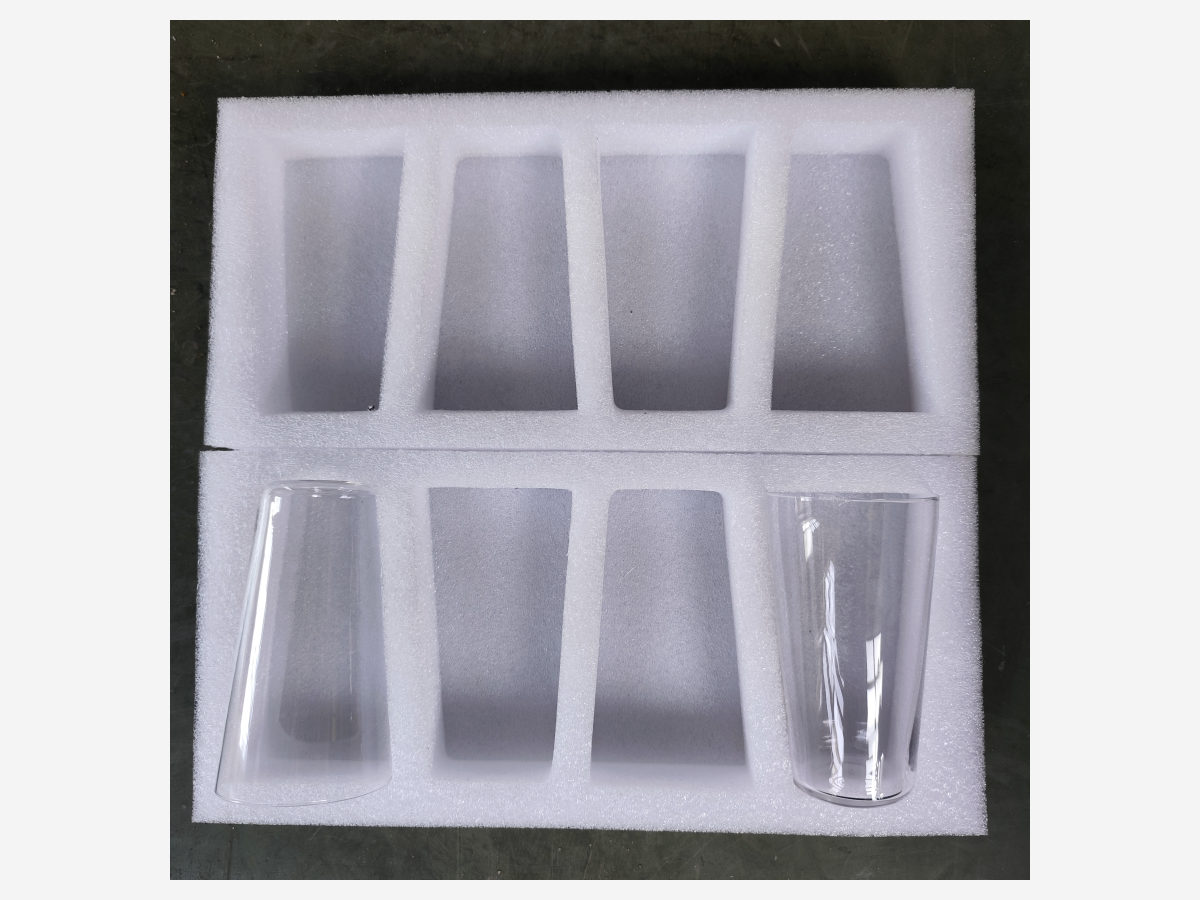
Quick answer: the customers who most often need custom EPE foam packaging are manufacturers, exporters, distributors and service companies shipping products that can be scratched, dented, vibrated, compressed or mixed together in transit. The right solution is determined by product risk and packing workflow—not by industry name alone.
WHO BUYS CUSTOM EPE FOAM PACKAGING?
Custom EPE foam packaging is usually purchased when a standard pad or carton divider cannot keep the product stable, clean and repeatable. A buyer may be an OEM, contract manufacturer, exporter, importer, distributor, fulfilment company or repair network. The common trigger is a measurable packaging problem: damage, excess empty space, slow packing, inconsistent presentation or high freight cost.
A serious RFQ should identify the product, risk, quantity, destination and carton. That lets the EPE foam packaging supplier recommend an insert rather than simply quote a sheet of foam.
- AUTOMOTIVE AND INDUSTRIAL COMPONENT MANUFACTURERS
Automotive parts, machined components, sensors, valves and assemblies often need cavities that keep edges, threads, coatings and connectors apart. Buyers may need trays for production flow, end caps for export cartons or returnable tote liners for plant-to-plant handling.
Ask for:
- Part weight, centre of gravity and approved contact surfaces.
- Oil, grease, ESD, cleanliness and temperature requirements.
- KLT or tote dimensions if the packaging is reusable.
- Stacking direction, pallet pattern and expected vibration.
- A drawing revision and a sample-based fit check.
- ELECTRONICS AND ELECTRICAL EQUIPMENT OEMs
Electronic housings, control panels, power modules and test devices can be damaged by abrasion, movement or incorrect orientation. A custom insert can separate displays, connectors and fragile surfaces while keeping accessories in a known position.
The buyer should specify:
- Screen, switch, connector and cable clearance.
- Any ESD or clean-handling requirement.
- Access needed for packing and unpacking operators.
- Product orientation and accessory locations.
- Carton dimensions and top protection.
Do not assume every electronics insert needs the same material. Confirm the contact surface, cavity geometry and handling risk with the factory.
- MACHINERY, TOOLS AND SPARE-PART EXPORTERS
Machinery parts and tools are often heavy, irregular or sharp-edged. A loose part can damage the carton or another part during sea, road or air transport. EPE foam end caps, corner blocks, saddles and layered trays can create a controlled load path.
A buyer should send the part weight, lifting points, sharp edges, surface finish, corrosion concerns and carton plan. For heavy items, ask the supplier to explain where the load is carried and where clearance prevents concentrated impact.
- FURNITURE, GLASS AND HOME-APPLIANCE SUPPLIERS
Furniture panels, mirrors, glass accessories, appliance doors and finished surfaces need separation and edge protection. EPE foam pads, profiles and corner pieces can reduce scuffs while keeping the packaging light enough for manual handling.
The key questions are:
- Which surfaces can contact foam?
- Which edges need a thicker corner or end protector?
- Will the item be packed once or returned and repacked?
- What carton compression and stacking condition is expected?
- Can the design nest or flat-pack to reduce freight volume?
- FRUIT, FOOD AND AGRICULTURAL PACKING OPERATIONS
Fruit exporters, packhouses and specialty food brands may use EPE foam trays when products need separation, cushioning and controlled presentation. The design should consider fruit size variation, ventilation, moisture, cold-chain handling and the destination market’s packaging requirements.
Buyers should confirm whether the foam is used as an inner separator, a tray or a display component, and should request material and cleaning information for their compliance review.
- MEDICAL, LABORATORY AND MEASURING-EQUIPMENT SUPPLIERS
Instruments, test kits and laboratory equipment may need stable cavities, accessory identification and protection from surface contact. A buyer should specify cleanliness, calibration accessories, fragile controls, battery separation and the number of times the case or carton will be opened.
For regulated projects, the packaging record should match the device part number and revision. The supplier can provide technical data and inspection records, while the buyer’s quality and regulatory teams decide the applicable requirements.
- E-COMMERCE, RETAIL AND PRIVATE-LABEL BRANDS
A retail or e-commerce brand may need custom EPE foam inserts when returns, unboxing damage or inconsistent presentation are reducing margin. The insert should protect the item during parcel handling and allow an operator or customer to remove it without tools.
Ask for a parcel-size option, return-and-repack test, product access points and a design that supports efficient fulfilment. A small reduction in damage and repacking time can be more valuable than a small reduction in foam unit price.
HOW TO KNOW IF YOU NEED A CUSTOM DESIGN
You probably need a custom EPE foam insert when:
- A standard pad leaves the product moving inside the carton.
- Surface scratches or corner damage appear after shipping.
- Operators spend too long wrapping or positioning each item.
- Accessories are lost or mixed between product units.
- The carton is oversized because the product has no controlled support.
- A repeat customer wants the same pack-out every time.
- Your compliance team needs repeatable material and weight records.
WHAT TO SEND TO A FACTORY FOR A USEFUL QUOTE
Send a drawing, sample or accurate photographs with dimensions; product weight; fragile or cosmetic areas; target quantity; destination; carton or tote size; transit risks; sample requirement; inspection standard; and any material, ESD, cleanliness or PPWR-oriented data request.
Ask the EPE foam inserts manufacturer to separate design review, sample, tooling, unit, packing and freight costs. Request a drawing, part number, sample plan and pack-out proposal, not only a price per piece.
Choose an EPE packaging guide by product risk
A useful EPE foam packaging design starts with the product risk: fragile edges, surface finish, weight, ESD sensitivity, cleanliness, stack load, return cycle and export route. Use the application guides below to prepare a more complete supplier RFQ, then validate the final pack with representative products and buyer-defined tests.
Industrial machinery and OEM components
- Custom EPE Foam Inserts for Industrial Automation Components
- EPE Foam Packaging for CNC Machined Parts and Precision Metal Components
- EPE Foam Packaging for Machinery Exports: A Specification Guide for OEM Buyers
- EPE Foam Packaging for Industrial Motors, Actuators and Gear Drives
- Custom EPE Foam Trays for Bearings, Gears and Transmission Parts
- Custom EPE Foam Trays for Valves, Pumps and Machined Parts
- EPE Foam Packaging for Pressure Gauges, Flowmeters and Process Instruments
- Custom EPE Foam Case Inserts for Metrology Instruments and Gauges
- EPE Foam Packaging for HVAC and Refrigeration Components
- EPE Foam Packaging for Lighting Fixtures, LED Drivers and Electrical Accessories
- EPE Foam Packaging for Long Shafts, Probes and Precision Rods
- Custom EPE Foam Trays for Technical Ceramics and Electrical Insulators
- EPE Foam Packaging for Injection-Molded and Painted Housings
- Custom EPE Foam Line-Side Trays for Contract Manufacturing
Electronics, electrical and energy equipment
- Custom EPE Foam Inserts for Electronics: A European OEM Buyer Guide
- EPE Foam Inserts for Electronics Packaging
- Anti-Static EPE Foam for Electronics: Buying Guide for Packaging Teams
- EPE Foam Packaging for Renewable Energy and Electrical Components
- EPE Foam Packaging for Electrical Connectors and Wire Harness Assemblies
- Custom EPE Foam Inserts for EV Charging Connectors and Power Modules
- Custom EPE Foam Packaging for Telecom and Network Equipment
- EPE Foam Packaging for Semiconductor Equipment Spare Parts
- Custom EPE Foam Inserts for Optical Components and Camera Modules
Medical, laboratory and field equipment
- Custom EPE Foam Packaging for Medical Devices and Test Instruments
- Custom EPE Foam Racks for Test Tubes and Laboratory Sample Kits
- Custom EPE Foam Inserts for Laboratory Reagent and Calibration Kits
- Custom EPE Foam Case Inserts for Drones and Field Equipment
Fragile, consumer, food and gift products
- Custom EPE Foam Inserts for Bottles and Glass Jars: A B2B Packaging Guide
- Custom EPE Foam Packaging for Ceramic Cups and Tableware: A Buyer Guide
- Custom EPE Foam Inserts for Cosmetic and Skincare Gift Sets: A B2B Guide
- Custom EPE Foam Inserts for Tea Tins and Specialty Food Gift Boxes
- Custom EPE Foam Fruit Trays for Apples, Pears and Peaches
- Custom EPE Foam Egg Trays for Transport: A Farm and Hatchery Buyer Guide
- Custom EPE Foam Inserts for Faucets and Sanitary Hardware: A Sourcing Guide
- Custom EPE Foam Inserts for Tool Sets and Gift Kits: A B2B Buyer Guide
- How to Design Custom EPE Foam Inserts for Fragile Products: A B2B Buyer Guide
Automotive, large products, returns and service parts
- Custom EPE Foam Packaging for Automotive Parts: A European Buyer Guide
- EPE Foam Edge and Corner Protectors for Furniture and Appliances
- Custom EPE Foam End Caps for Large Equipment Export to Europe
- EPE Foam Packaging for Aftermarket Spare Parts and Service Kits
- Custom EPE Foam Packaging for Marine Equipment Service Parts
- EPE Foam Packaging for Cross-Border E-Commerce Returns: A B2B Guide
Start a factory review
Hongying operates a 3,000+ m² EPE foam packaging factory in Shanghai. Send the product drawing or dimensioned photos, weight, units per pack, order quantity, destination and known damage problem. For European projects, packaging material and component weight data can be supplied for the responsible buyer or importer to assess against applicable PPWR obligations.
Review custom EPE foam inserts · Open the European buyer RFQ guide · Send an RFQ on WhatsApp
FREQUENT BUYER QUESTIONS
Is EPE foam only for fragile products?
No. It is also used for separation, surface protection, positioning, returnable totes and faster repeatable packing.
Can one insert serve different products?
Only if the size, support and risk are compatible. Separate cavities or modular layers are usually safer than one loose universal insert.
How do I select the right thickness?
Discuss product weight, load path, cavity fit, carton and distribution risk with the supplier, then approve a sample using the real product.
What makes a supplier suitable for an overseas B2B order?
Look for drawing control, sampling, measurable QC, repeat-order records, clear packing data and the ability to quote the full landed-cost assumptions.
Hongying provides custom EPE foam packaging for industrial, automotive, electronics, machinery, furniture, food, laboratory and e-commerce applications. Send your product dimensions, target quantity and damage risk to receive a practical buyer-focused quotation.